Marketing Manager Resume Examples That Get Interviews in 2026
Real marketing manager resume examples across digital, product, brand, and growth roles. See how top candidates present campaigns, metrics, and leadership — and use these to build a resume that works in 2026.
Updated Mar 12, 2026
Written by Artur Lopato
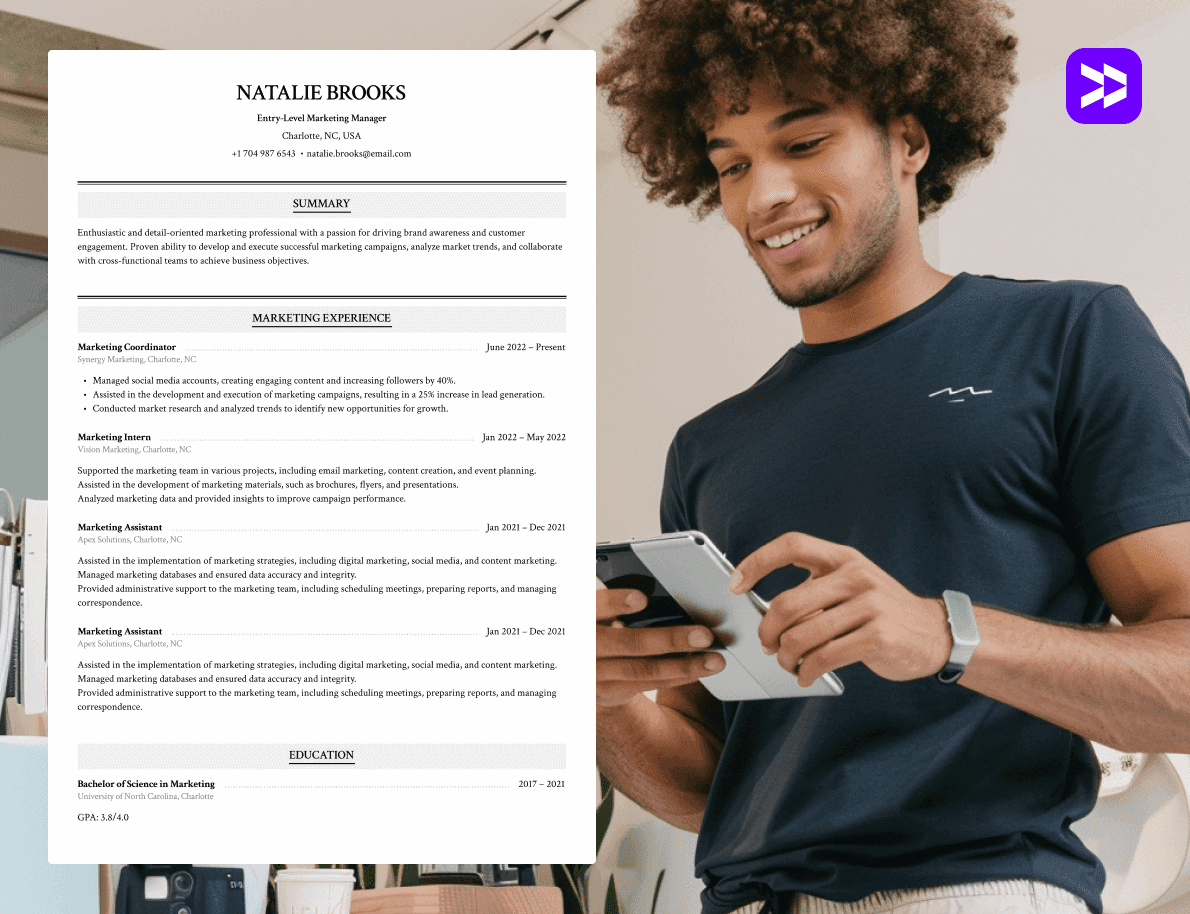
Most marketing managers write resumes that describe their work. The ones who get interviews write resumes that prove their impact. That gap — between describing and proving — is where most marketing applications stall.
The problem is structural. Marketing work is creative, iterative, and often multi-touch: you build the strategy, run the campaigns, brief the agency, analyze the data, and present the results to leadership. When that process gets compressed into a bullet point, nuance disappears. What's left is either too vague to convince anyone or too detailed to survive a 6-second scan.
What hiring managers actually read in a marketing resume
Research on recruiter behavior is consistent: the summary and the first two bullets of your most recent role carry 80% of the hiring decision weight at the screening stage. Everything else is confirmation. That means your job isn't to document your marketing career — it's to lead with your best results and let the rest follow.
For marketing managers, those results should be specific. Not "led digital campaigns" but "grew organic traffic 140% in 9 months through content and technical SEO." Not "managed agency relationships" but "cut agency retainer costs 22% while maintaining campaign output." Specificity is what separates a marketable resume from a generic one in a stack of 200 applications.
Why budget ownership changes everything on a marketing resume
One of the most consistent differentiators in strong marketing manager resumes is explicit budget ownership. Candidates who show they've managed and optimized real budgets — even $50K-$200K — signal a level of commercial accountability that pure campaign metrics don't. Hiring managers at growth-stage companies are especially attuned to this, because they need someone who can own spend decisions, not just execute against someone else's plan.
If you've managed budget, say so: name the figure or range (use a percentage of total marketing spend if the number is sensitive), and tie it to outcomes — cost per acquisition, ROAS, or budget-to-revenue ratio. The examples below show how marketing managers across digital, product, brand, and growth disciplines structure these signals into resumes that consistently land interviews. Start with a proven marketing resume template that's already ATS-optimized, then tailor from there. If you're starting from scratch, our resume writing guide covers the foundational structure.
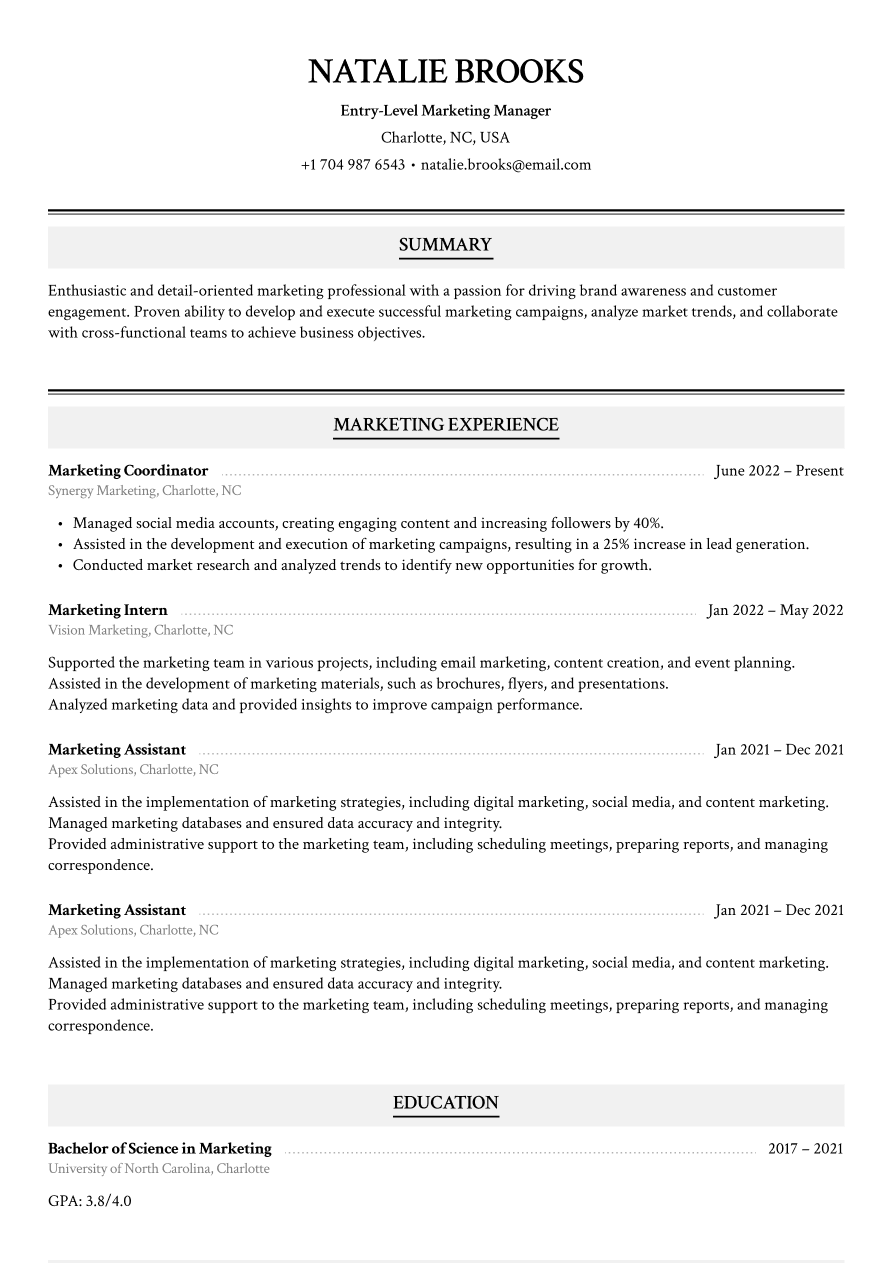
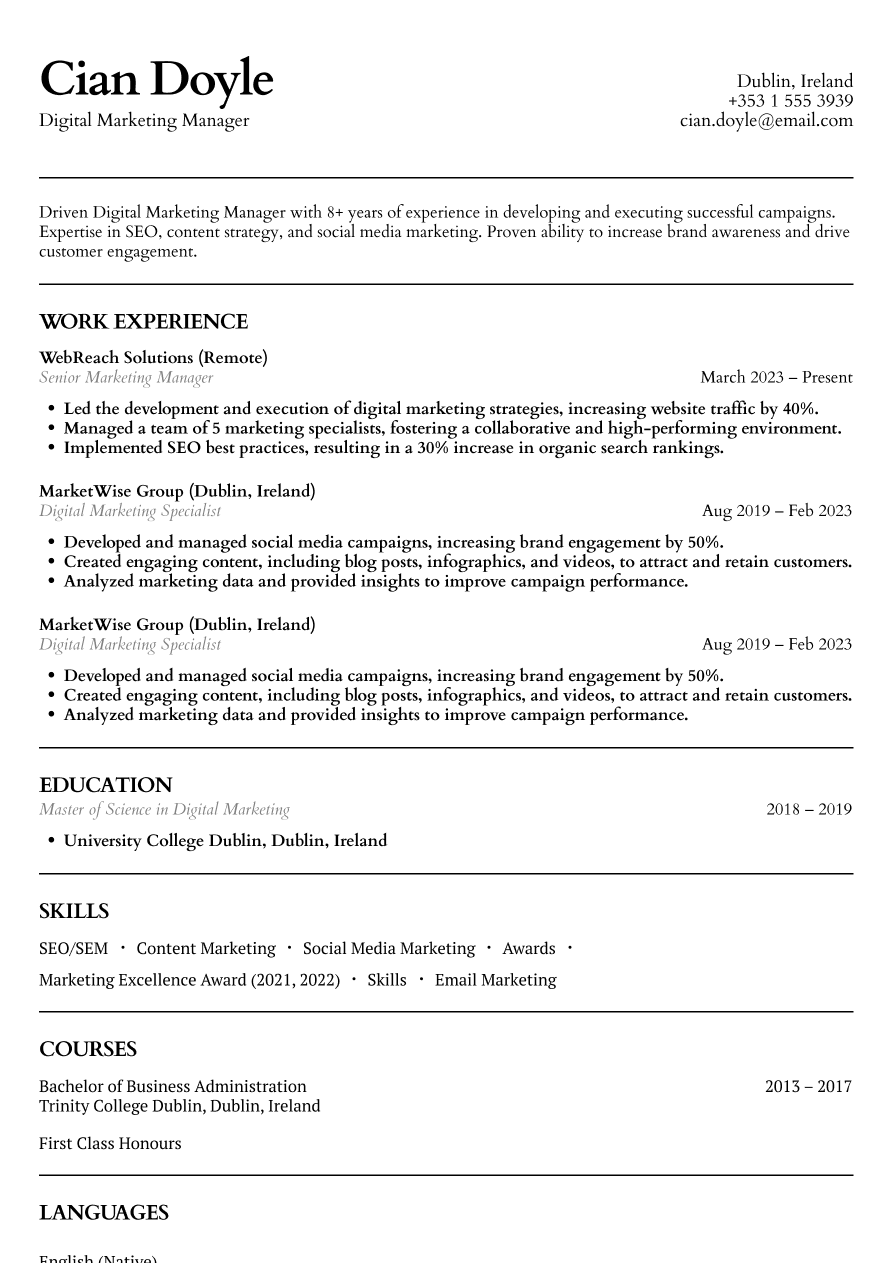
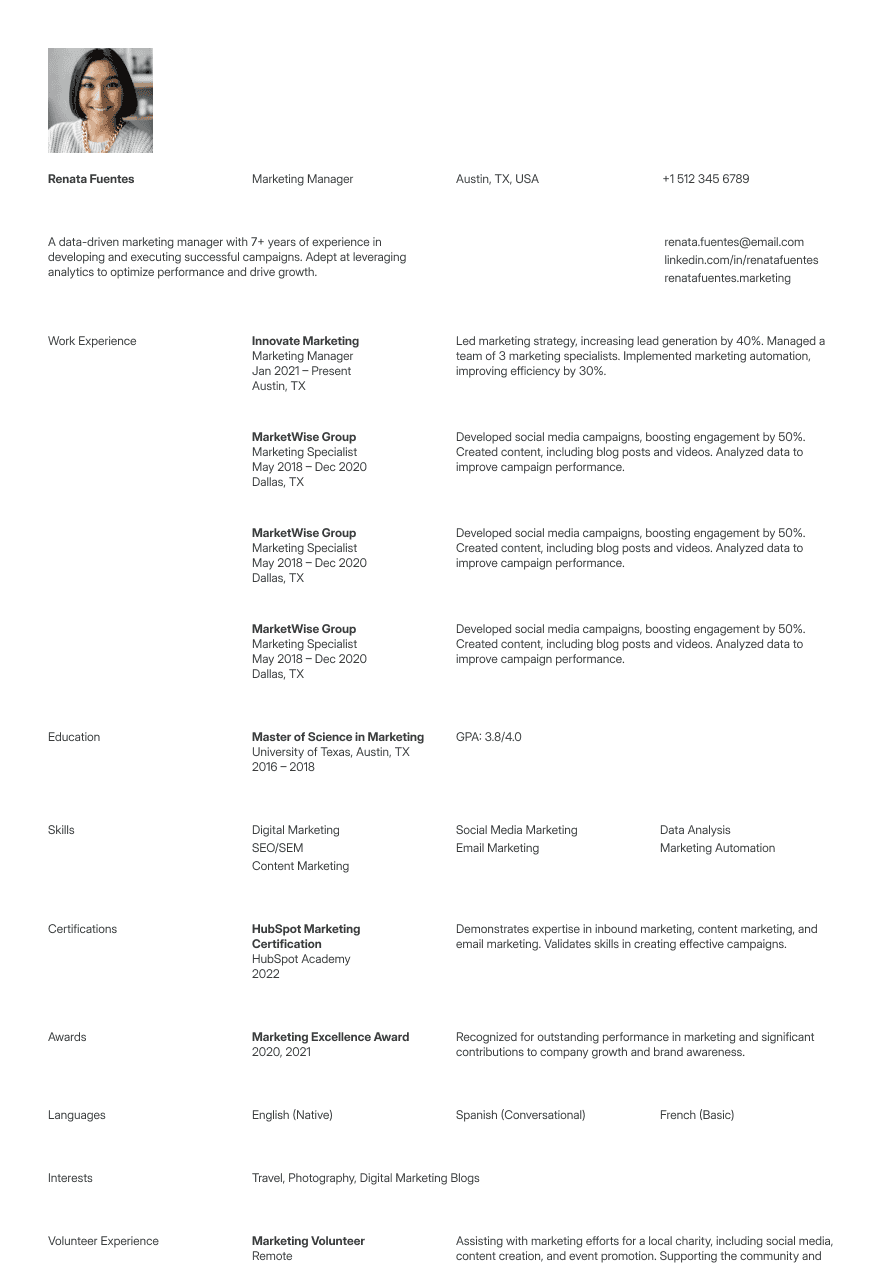
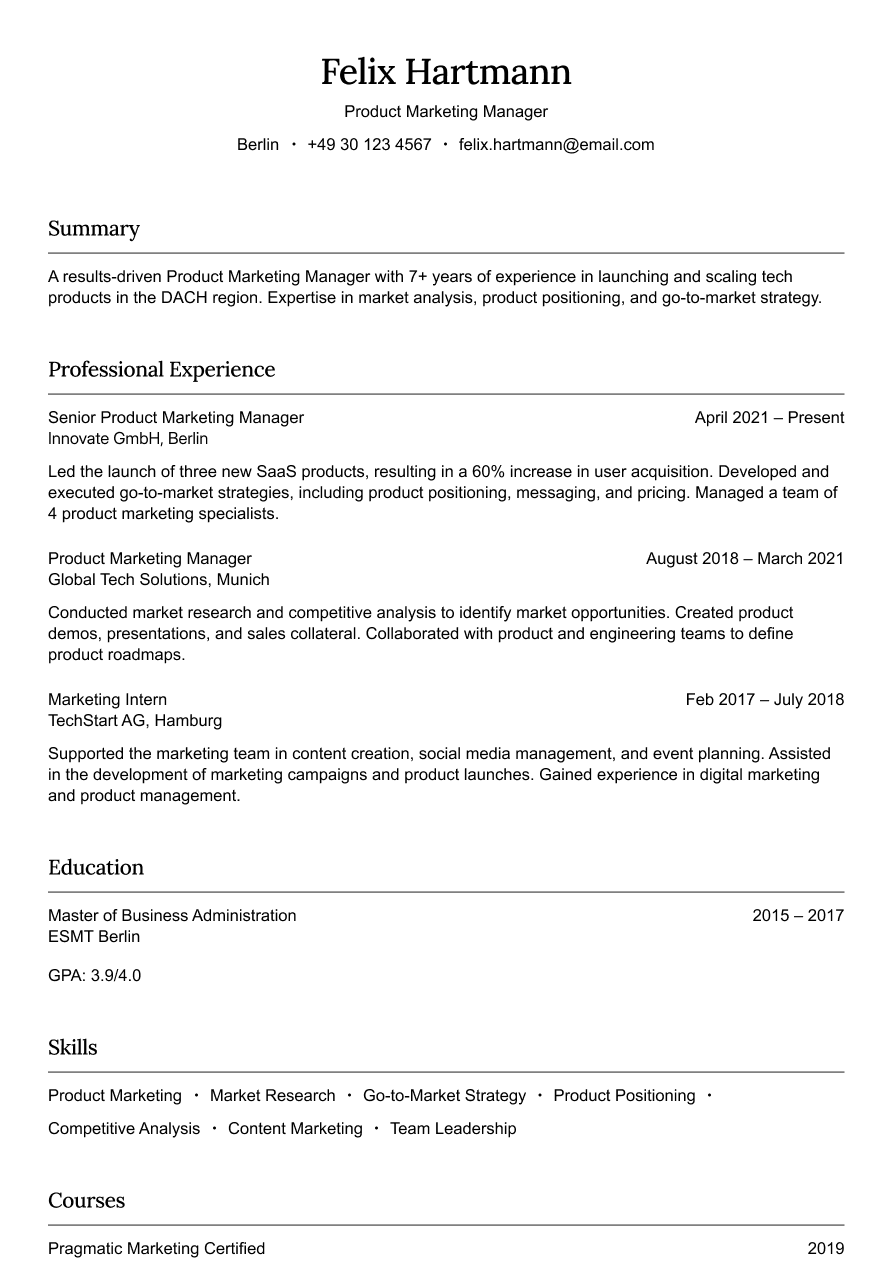
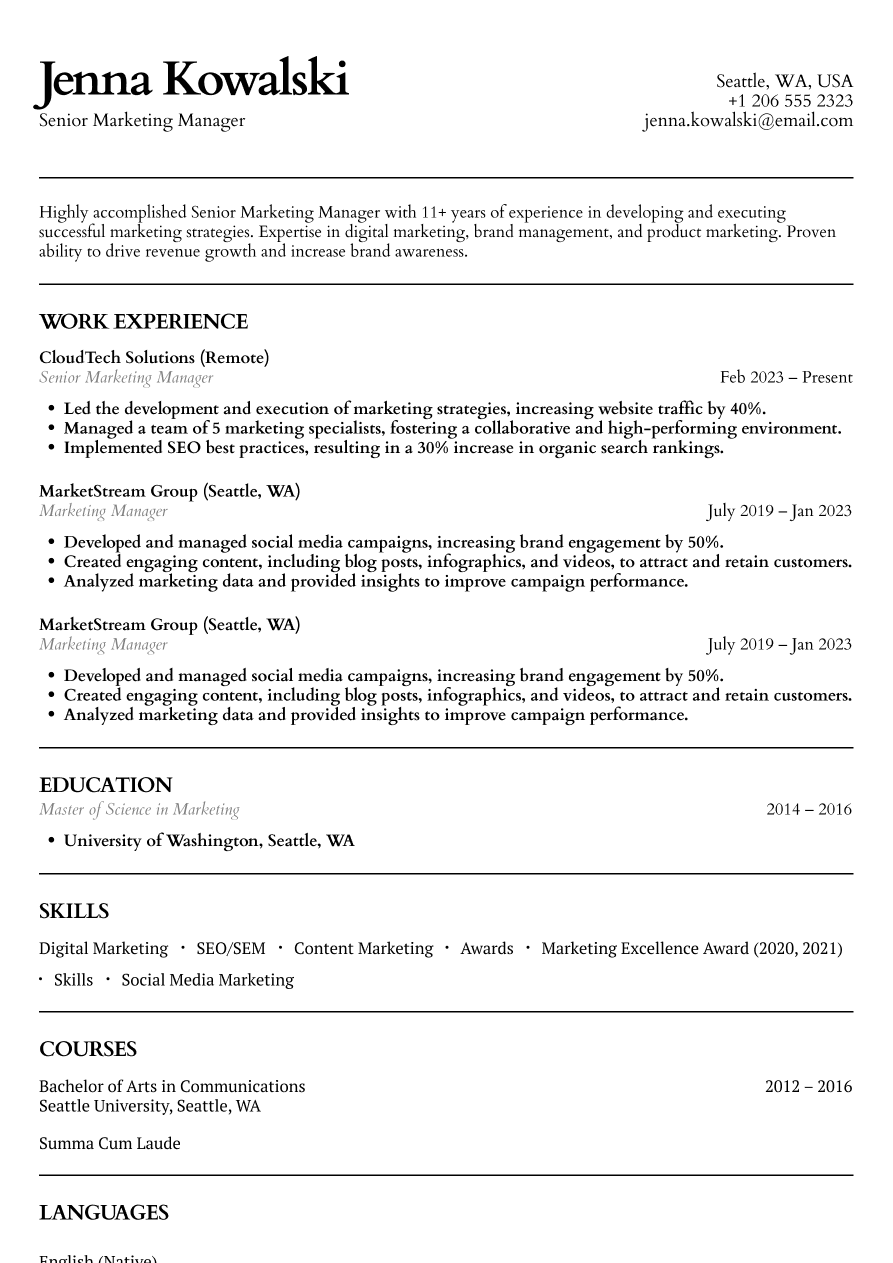
Marketing Manager Resume Examples by Role and Specialization
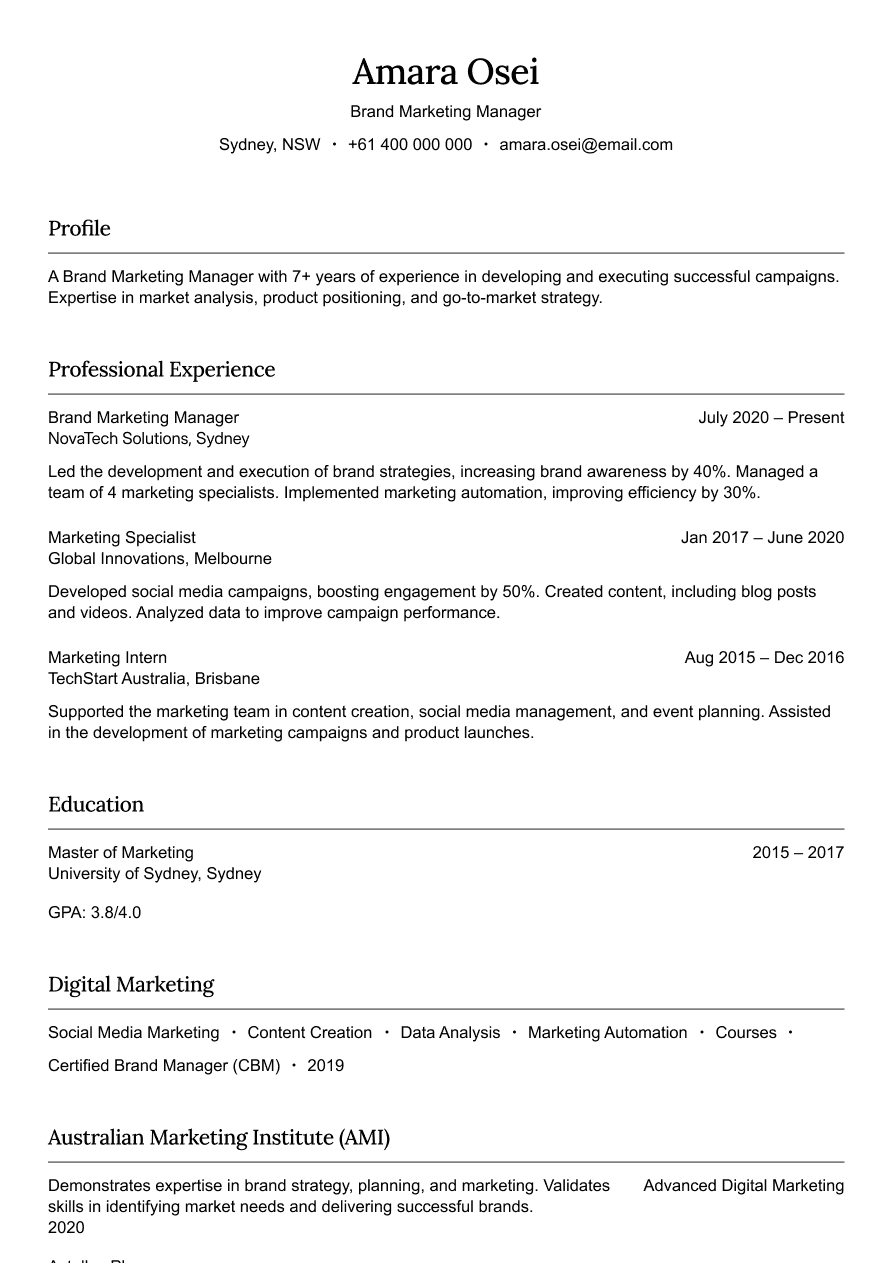
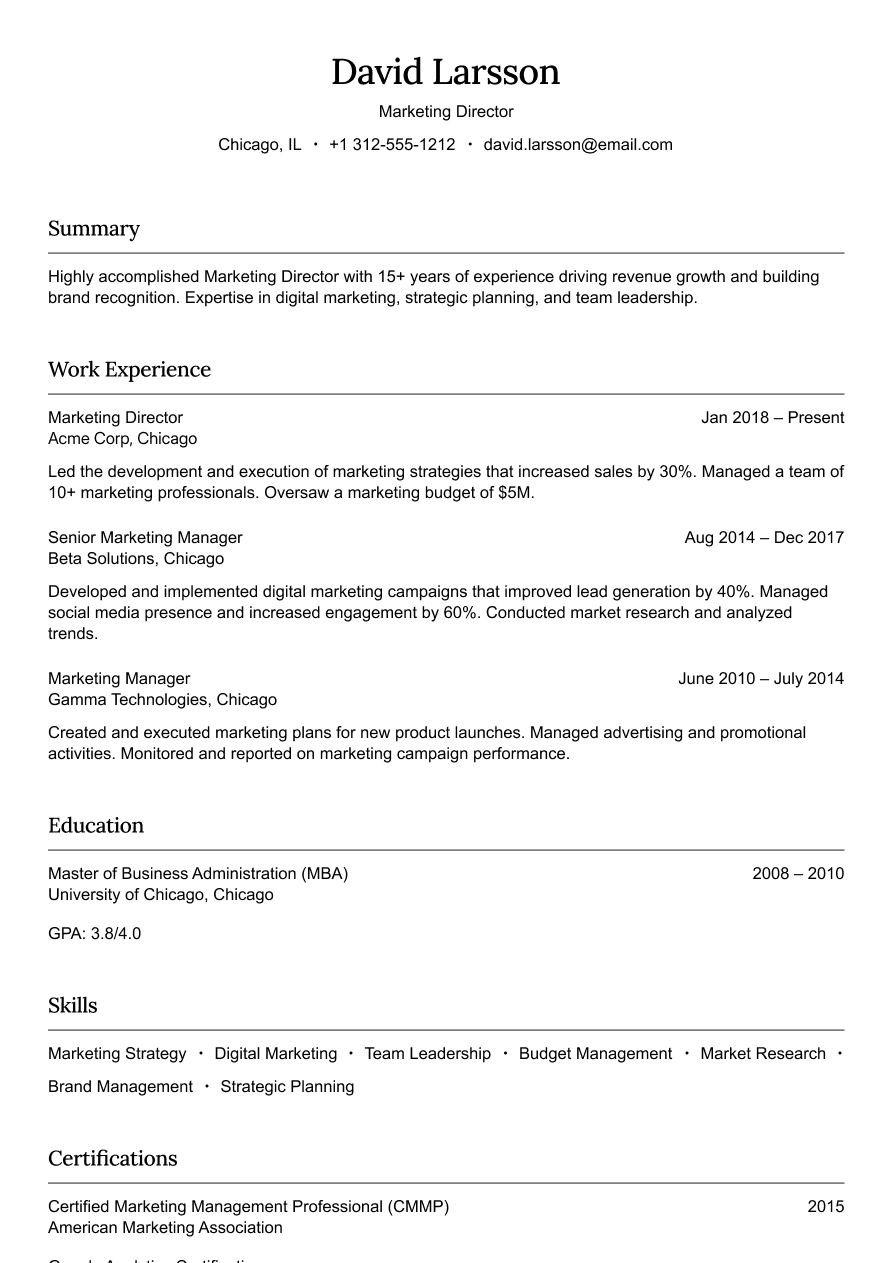
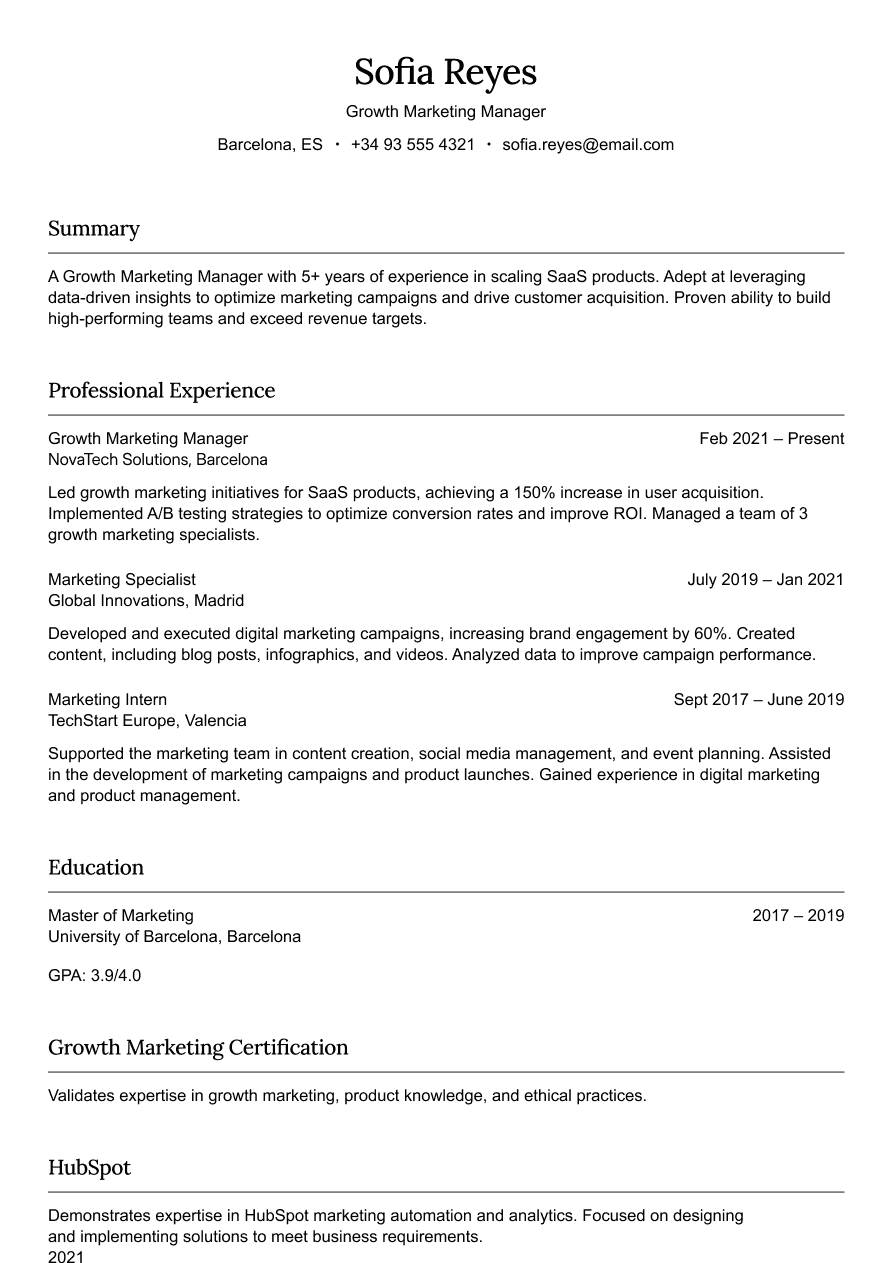
Do's and Don'ts for Marketing Manager Resumes
Marketing resumes fail for predictable reasons. Here's a direct breakdown of what works, what doesn't, and why — based on patterns that consistently separate shortlisted candidates from the rest.
Do This | Not This |
|---|---|
"Grew email list 65% to 280K subscribers through lead magnet strategy" | "Managed email marketing campaigns" |
"Reduced CPL by 34% through channel reallocation and A/B testing" | "Optimized marketing campaigns for performance" |
"Led team of 6 across content, paid, and brand, delivering 3 product launches" | "Managed cross-functional marketing team" |
"Managed $400K annual paid media budget, achieving 4.2x ROAS" | "Responsible for paid advertising and budget management" |
Name every platform: HubSpot, Salesforce, Google Analytics 4, Marketo | "Proficient in marketing tools and platforms" |
The tools issue matters more than most marketers realize. ATS systems at tech and SaaS companies flag specific platform names — HubSpot, Marketo, Salesforce, GA4, Semrush, Hootsuite — as proxy signals for experience level. A resume that describes your strategy fluently but doesn't name the tools gets deprioritized by automated filters before a human reads a word.
One more thing to avoid: resume summaries that could apply to any marketing professional. "Results-driven marketing manager with a passion for brands" describes nothing and convinces no one. Your summary should do in two sentences what your campaigns do in a quarter: establish a clear message and drive the reader to act.
Writing a Marketing Manager Resume Summary That Doesn't Sound Like Everyone Else's
The resume summary is the hardest section for marketing professionals to write — which is ironic, given that distilling a message into a sharp, resonant opener is exactly what marketers do for a living. The issue is that most people switch off their marketing instincts when writing about themselves.
A strong marketing manager summary does three things in 3-5 lines:
Names your specialization or strongest vertical — B2B SaaS, DTC, consumer brands, healthcare, fintech. Generalist summaries signal that you'll take any job; focused ones signal expertise.
Leads with a concrete result — your best single outcome: a traffic number, a revenue contribution, a team size, a notable brand. This is your headline metric and it should appear in sentence one.
Signals what level you operate at — do you build strategy, execute campaigns, manage agencies, lead teams, own budget, or all of the above? The summary tells recruiters which type of candidate they're reading before they reach the experience section.
"The best marketing resumes I've seen open with a specific result and a specific context. Not 'experienced marketer' — more like: 'Built a demand gen engine that delivered $3.2M in influenced pipeline in 18 months for a Series B SaaS company.' That tells me everything."
If you're pivoting between specializations — say, from brand to performance marketing — the summary is where you bridge the two. Acknowledge both, lean into the overlap, and signal the direction you're heading. Recruiters read summaries for positioning; make sure yours positions you where you actually want to land. Browse the full resume examples library to see how different marketing specializations frame their summaries.
ATS Keywords That Marketing Manager Resumes Actually Need
Marketing is one of the most fragmented job categories in ATS systems. A posting for a "Marketing Manager" at one company might want a channel expert; at another, it wants a generalist team lead. The keyword profile shifts significantly depending on the role type — which is why submitting the same resume to every marketing manager posting rarely works.
Here's a functional breakdown of the keywords that matter by marketing specialization:
Specialization | Must-Have Keywords |
|---|---|
Digital / Performance | paid media, ROAS, CPA, A/B testing, Google Ads, Meta Ads, attribution modeling, GA4 |
Content / SEO | content strategy, SEO, organic traffic, editorial calendar, keyword research, Semrush, Ahrefs |
Product Marketing | go-to-market, positioning, messaging, competitive analysis, launch, sales enablement, buyer persona |
Brand | brand strategy, brand identity, brand guidelines, visual storytelling, market research, campaign management |
Growth | growth experiments, funnel optimization, conversion rate, retention, lifecycle marketing, cohort analysis |
General / Team Lead | demand generation, marketing strategy, cross-functional, budget management, HubSpot, Salesforce, Marketo |
Cross-functional keywords carry significant weight regardless of specialization: "cross-functional collaboration," "stakeholder management," and "team leadership" appear in over 70% of marketing manager job postings. Include them naturally in your experience section — not as standalone skills, but inside achievement bullets that demonstrate them in practice. Explore our professional resume templates that are pre-formatted for keyword density and ATS compatibility.
Marketing Manager Resume FAQs
Should a marketing manager resume be one page or two?
One page for fewer than 7 years of experience; two pages for senior managers, team leads, or candidates with multiple specializations worth documenting. The deciding factor isn't years — it's whether the second page adds meaningful signal. A two-page resume padded with old internships or minor freelance projects hurts more than it helps. Keep the strongest 80% and cut the rest.
Do I need to show marketing certifications on my resume?
Certifications matter for some roles and are irrelevant for others. Google Ads and GA4 certifications carry real weight for performance marketing roles and pass ATS keyword scans. HubSpot certifications are widely recognized for inbound and CRM-heavy roles. For senior brand or strategy positions, certifications matter far less than portfolio-level results and leadership track record. Include certifications in a dedicated section — don't bury them in skills.
How do I show leadership experience if I haven't managed a large team?
Leadership on a marketing resume isn't just headcount. You can demonstrate it through cross-functional project ownership, agency management, intern or contractor mentorship, or leading a major launch from start to finish. What matters is showing decision-making authority and accountability for outcomes — not the size of your org chart row.
What's the best format for a marketing manager resume?
Reverse chronological is the standard and remains the most ATS-compatible. Combination formats (summary + skills section at the top, then chronological work history) work well for marketing managers who want to lead with tool expertise and channel specializations before the experience section. Avoid heavy visual or graphic-heavy formats — most ATS systems can't parse them, and your content ends up invisible.