CV Templates
CV Templates for Every Format, Every Market
120+ CV templates at Wensa for international job seekers. UK, EU, Australia, Middle East, and global markets — download yours and start editing immediately.
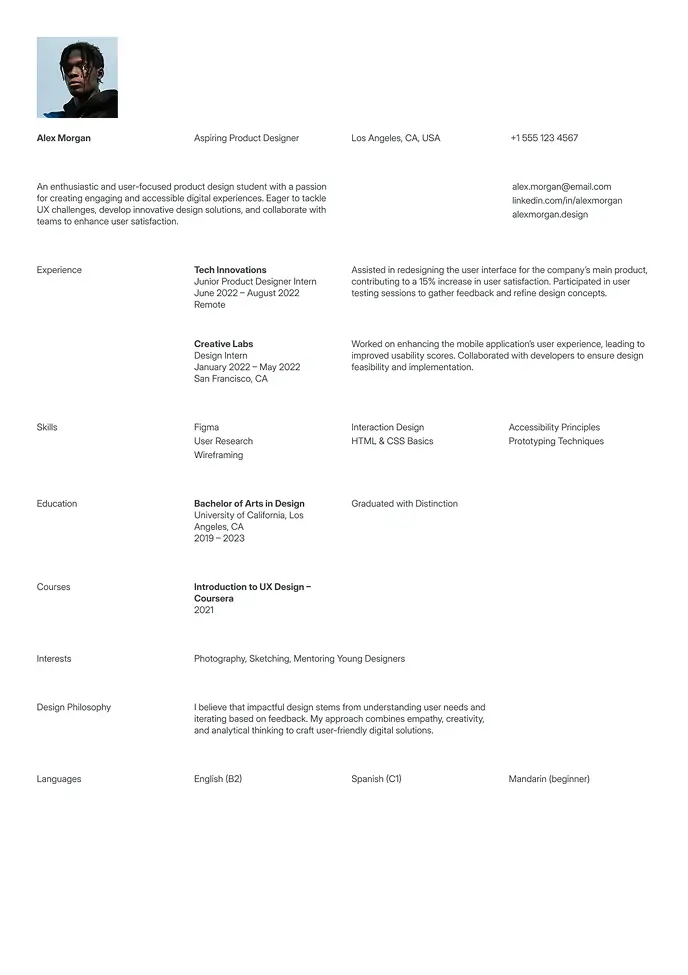
Berlin
Clean and simple resume, great for students or interns.
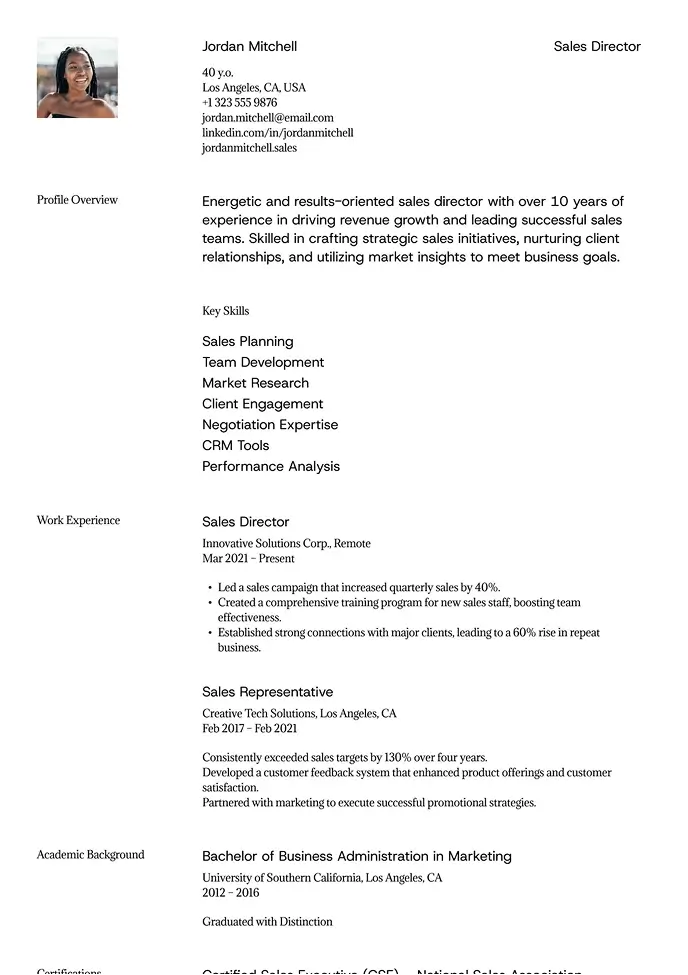
Sienna
Professional layout with a clear focus on leadership.
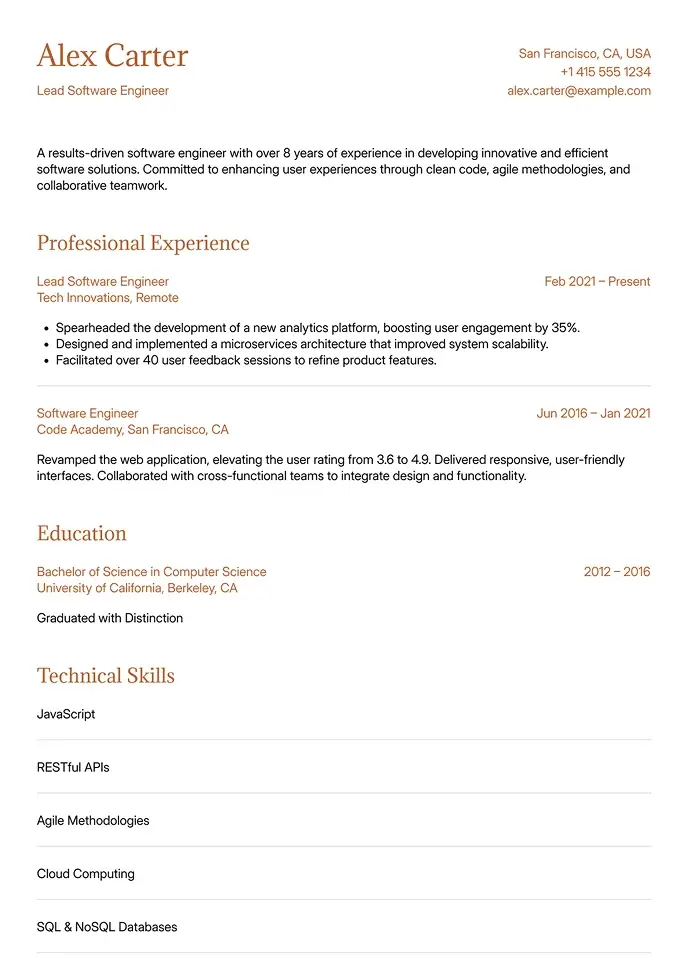
Canyon
Simple and clean, built for technical or structured resumes.
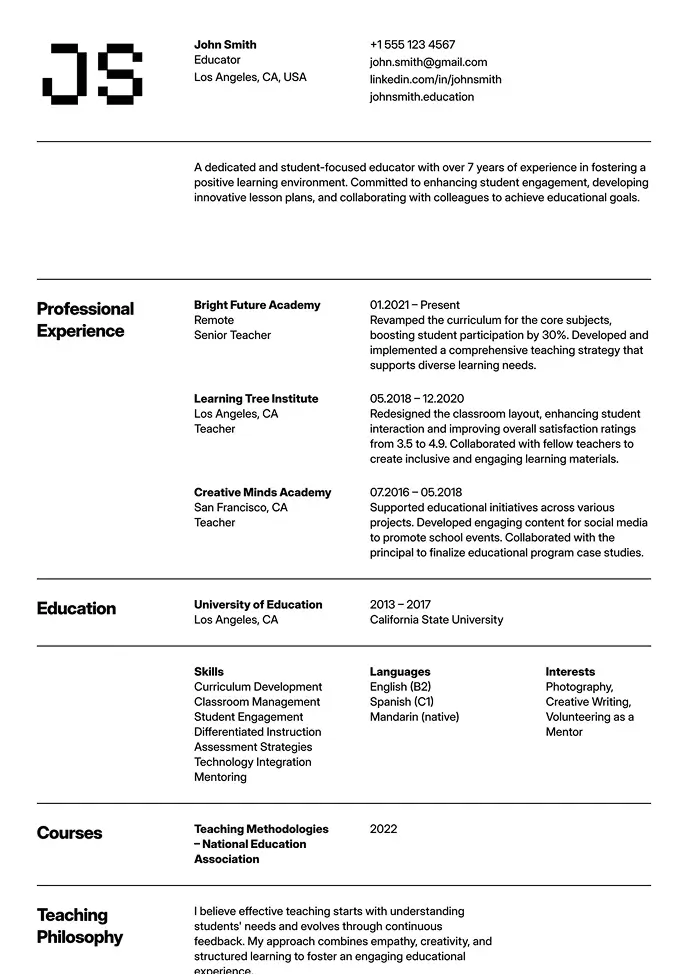
Oslo
Classic structure with modern typography and grid-based layout.
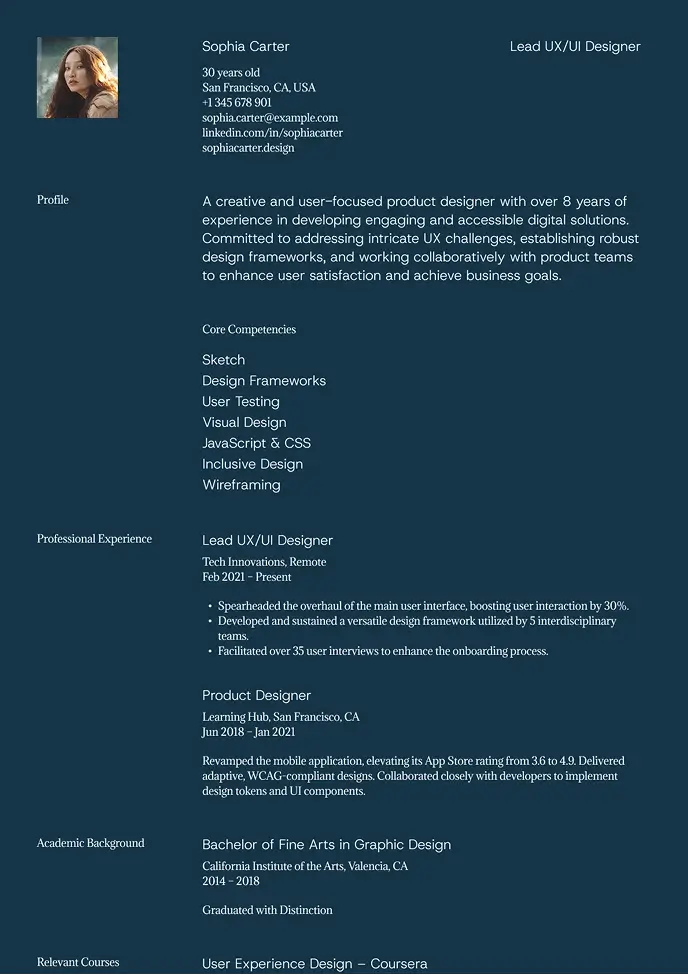
Denali
Dark, stylish design that highlights key details with contrast.
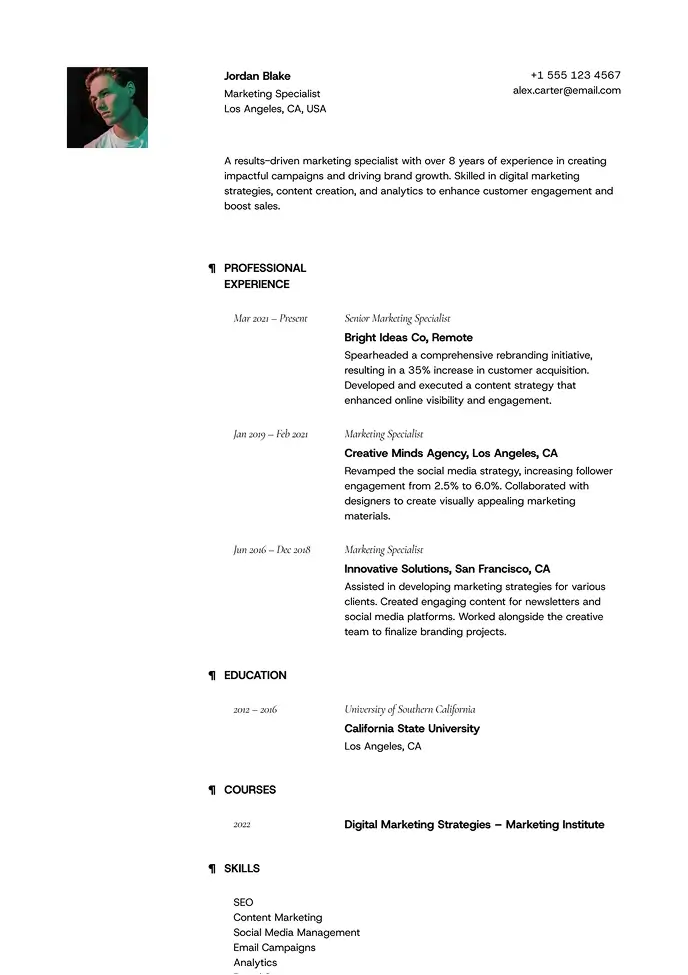
Lima
Minimal and airy, perfect for professionals who value clarity.
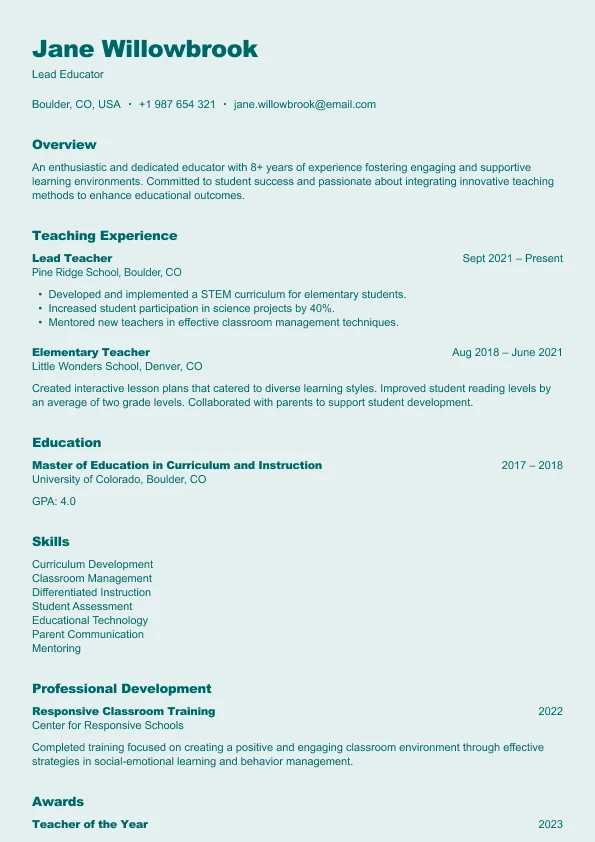
Harbor
A clear, reader-friendly layout built who want a structured and approachable resume.
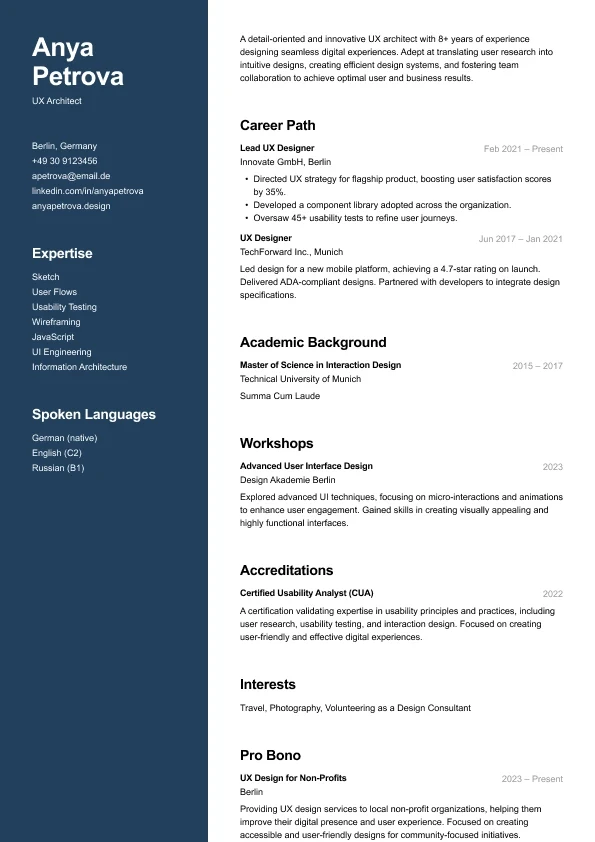
Carbon
A modern two-column resume who want strong visual hierarchy and clean structure.
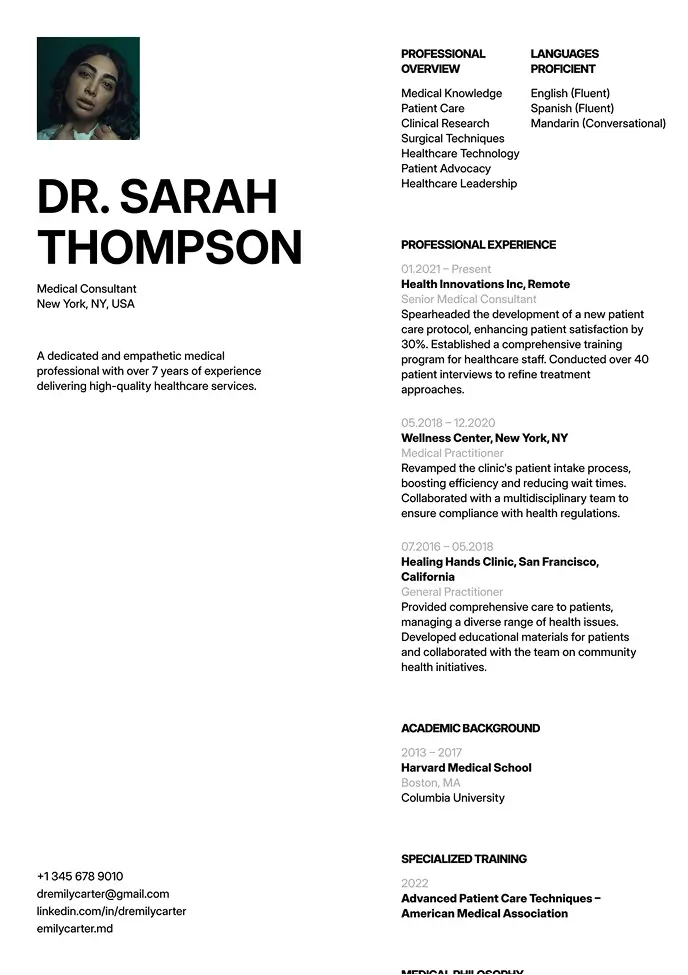
Oxford
Clean layout for clear info flow, great for formal industries.
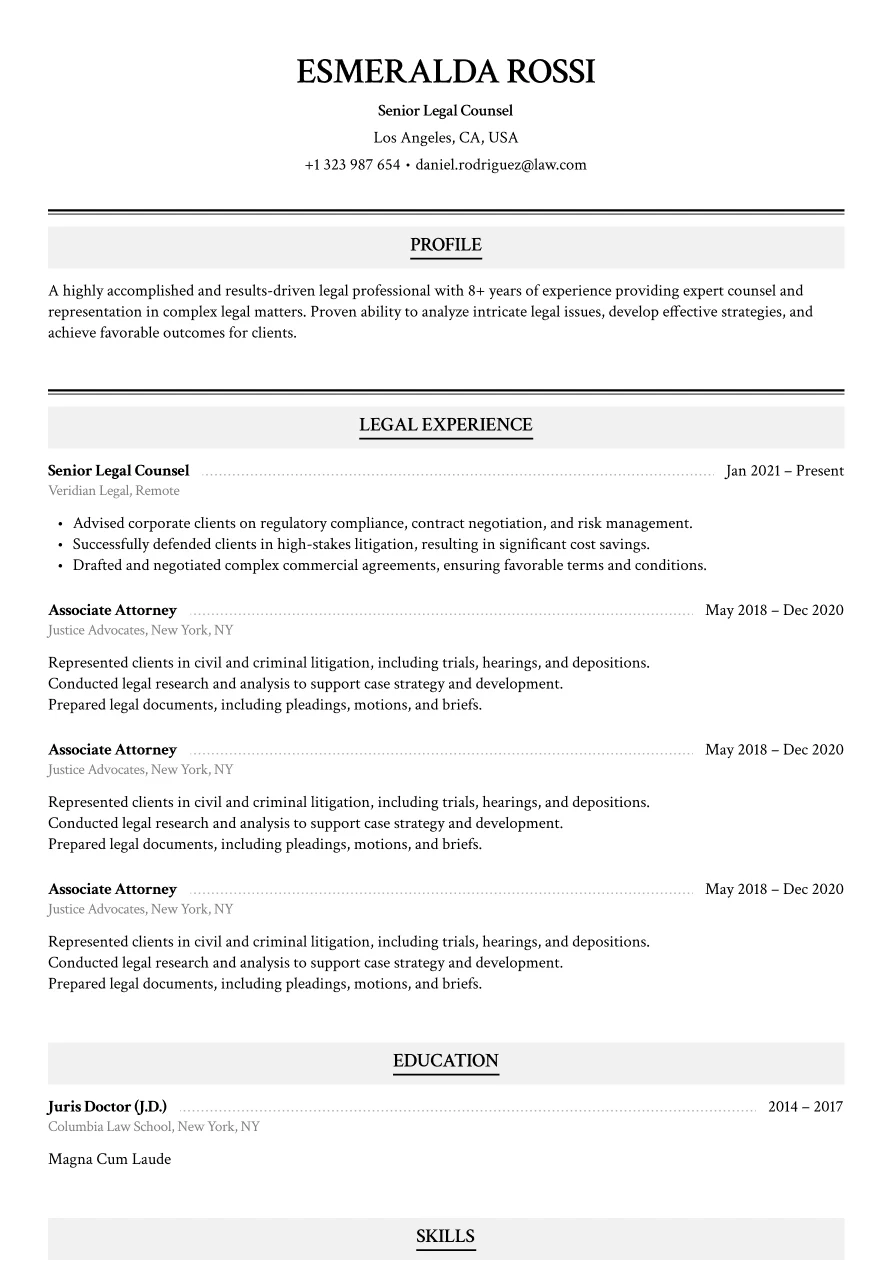
Haven
Classic legal layout with refined section styling.
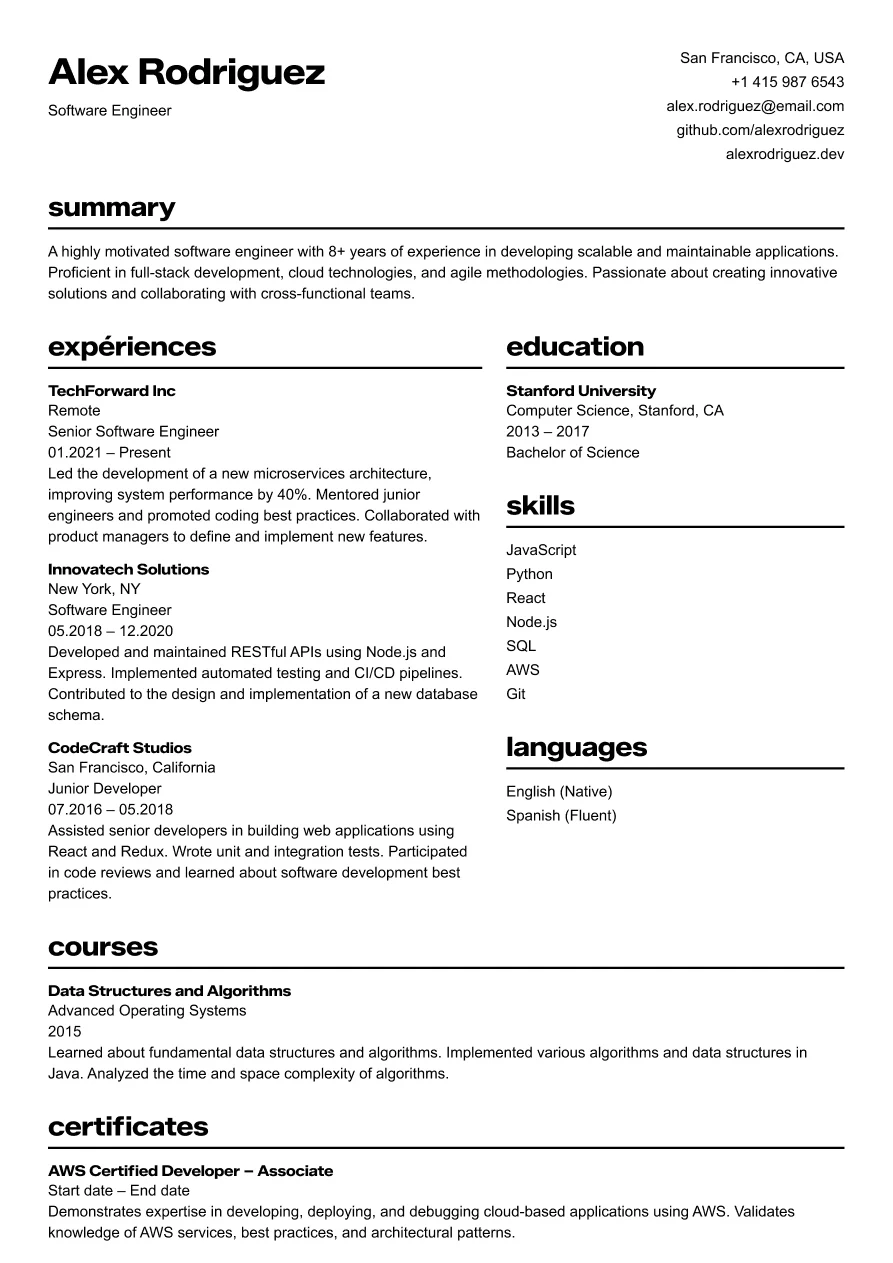
Osaka
Clear and structured layout for tech professionals.
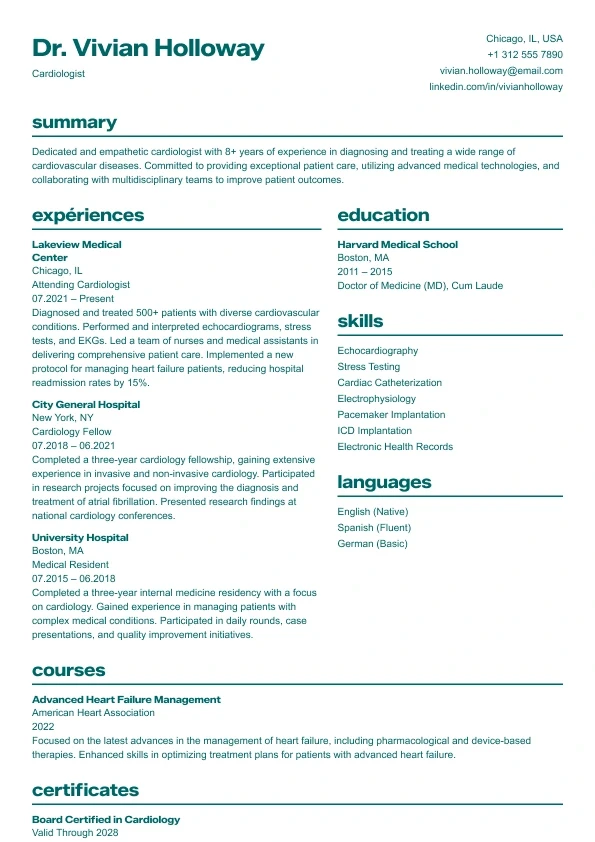
Aurora
Clean and structured layout with bold headings and a clear two-column design.
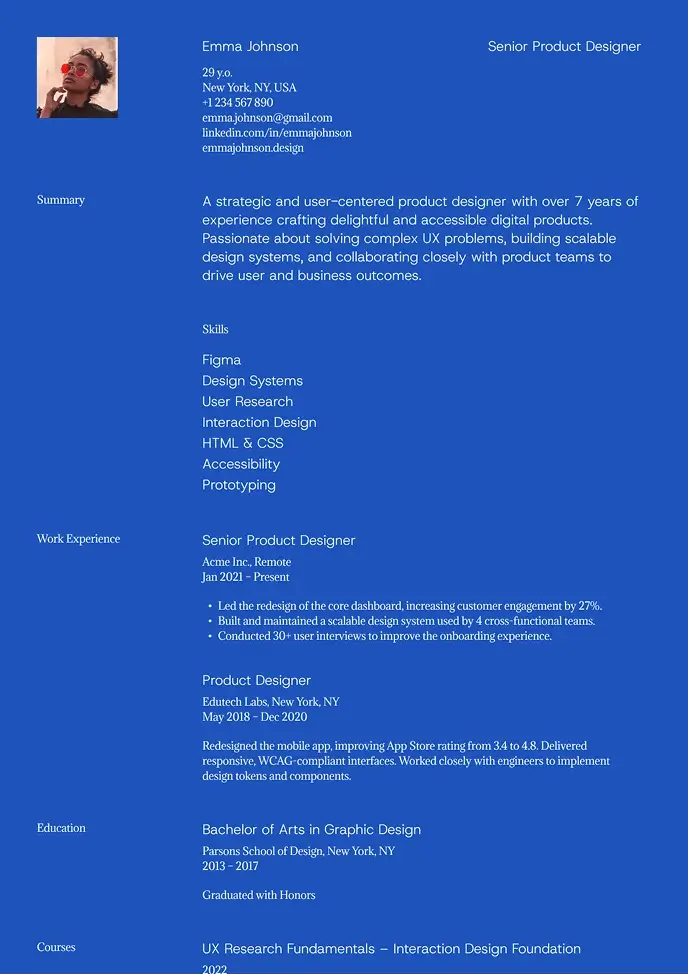
Kyoto
Bold and modern resume with strong contrast and easy structure.
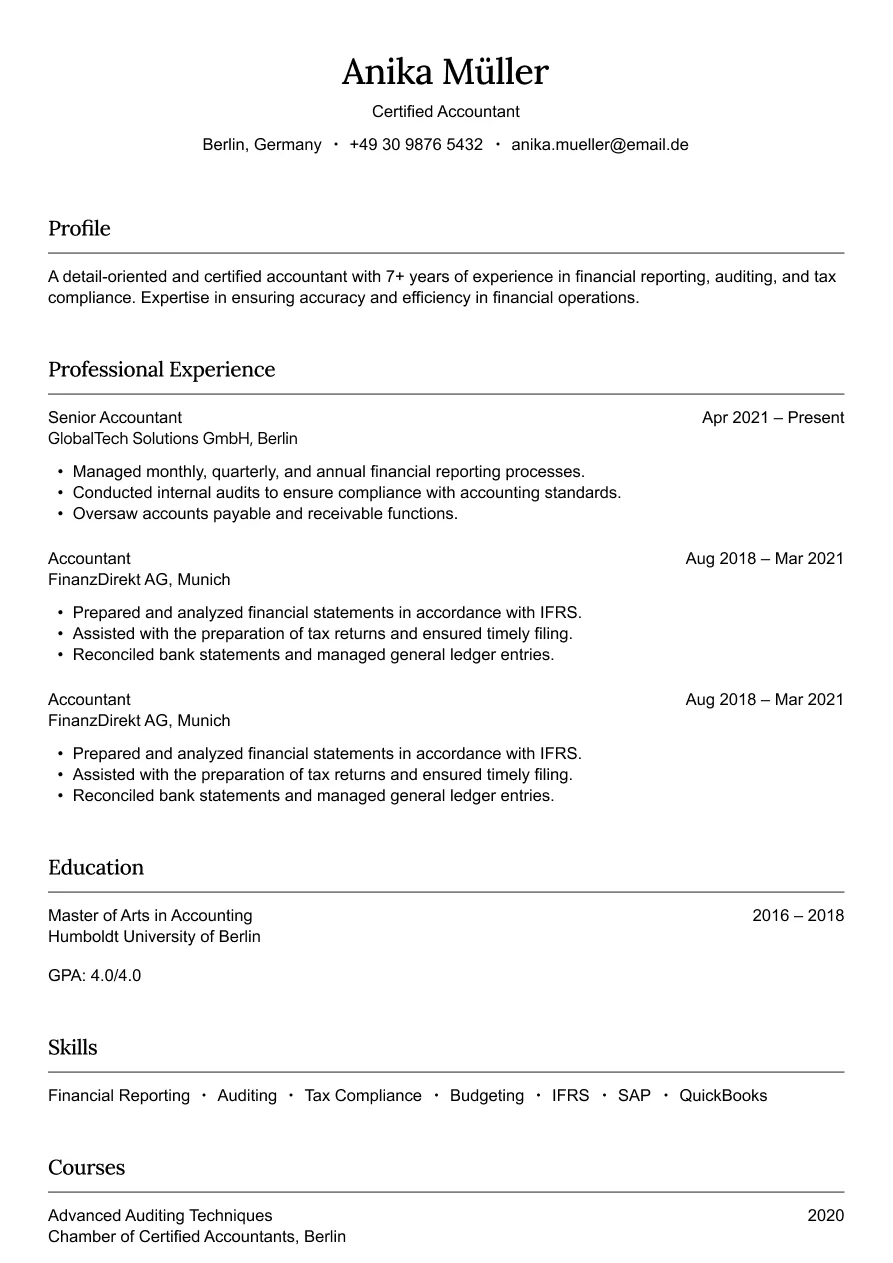
Austin
Simple and professional design for finance roles.
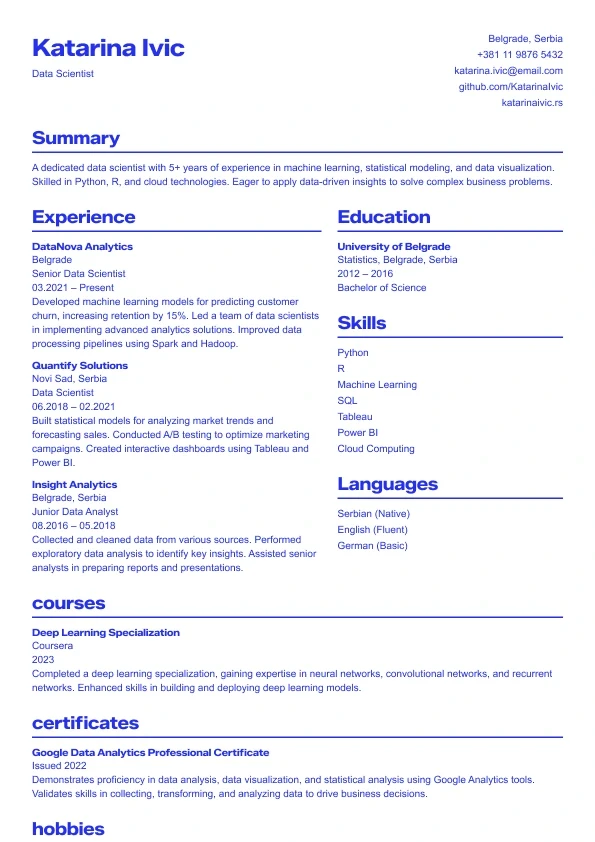
Sapphire
A bold, modern resume template with strong blue accents.
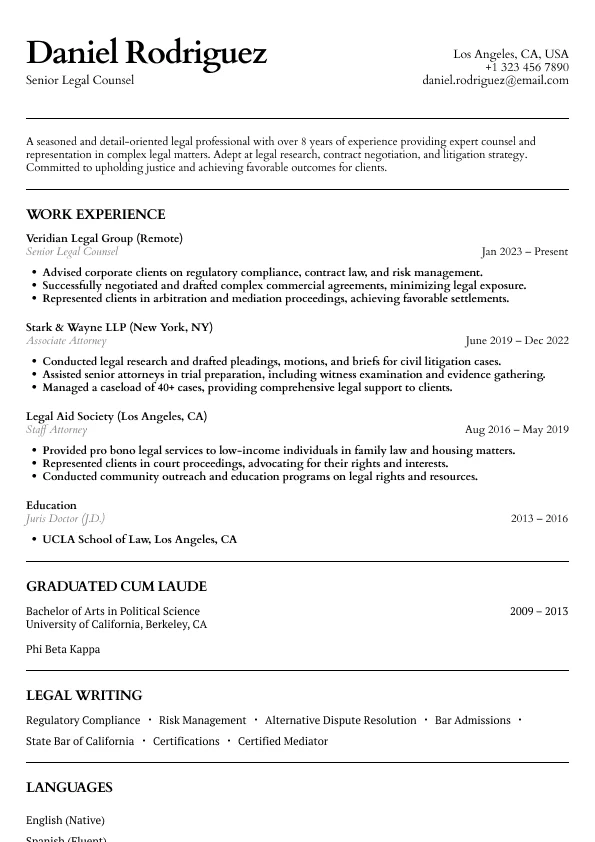
Atlas
Classic legal resume layout with clear hierarchy and refined section styling.
Free CV Templates
Clean CV layouts you can start with right away. Simple, professional designs that help you focus on content while using the Wensa builder at no cost.
Simple CV Templates
Clean, minimal layouts that emphasize your experience and skills. Ideal for straightforward, distraction-free presentations of your career story.
Professional CV Templates
Structured and polished designs that highlight your achievements with confidence. Great for corporate, legal, or management roles where clarity matters.
Modern CV Templates
Stylish and forward-thinking templates for creative and tech professionals. Eye-catching yet balanced — perfect for showcasing your personal brand.
ATS CV Templates
Optimize your CV for Applicant Tracking Systems. These layouts are designed to pass ATS scans easily while remaining visually appealing to recruiters.
Word CV Templates
Editable CV templates designed for Microsoft Word. Easy to customize, familiar to recruiters, and perfect for offline or manual editing.
PDF CV Templates
Reliable and consistent formatting every time. PDF CV templates preserve your design and layout — ideal for submitting polished applications.
Google Docs CV Templates
CV templates optimized for Google Docs. Work online, collaborate easily, and keep your formatting consistent across devices.
One-page CV Templates
One-page CV layouts that keep your experience clear and concise. Ideal for quick applications and roles where focus matters.
Two-column CV Templates
Two-column CV designs that balance structure and readability. Great for showcasing skills and experience side by side.
Creative CV Templates
Creative CV layouts for roles that value individuality. Designed to stand out while keeping your information clear and professional.
Resume vs CV: Which Document Do You Actually Need?
The most common mistake international job seekers make is submitting the wrong document type. In some markets this is simply unusual. In others — academic, research, and most European professional contexts — it signals that you don't understand the hiring norms of the country you're applying to. For a full breakdown of when to use each, see our CV vs resume guide with examples.
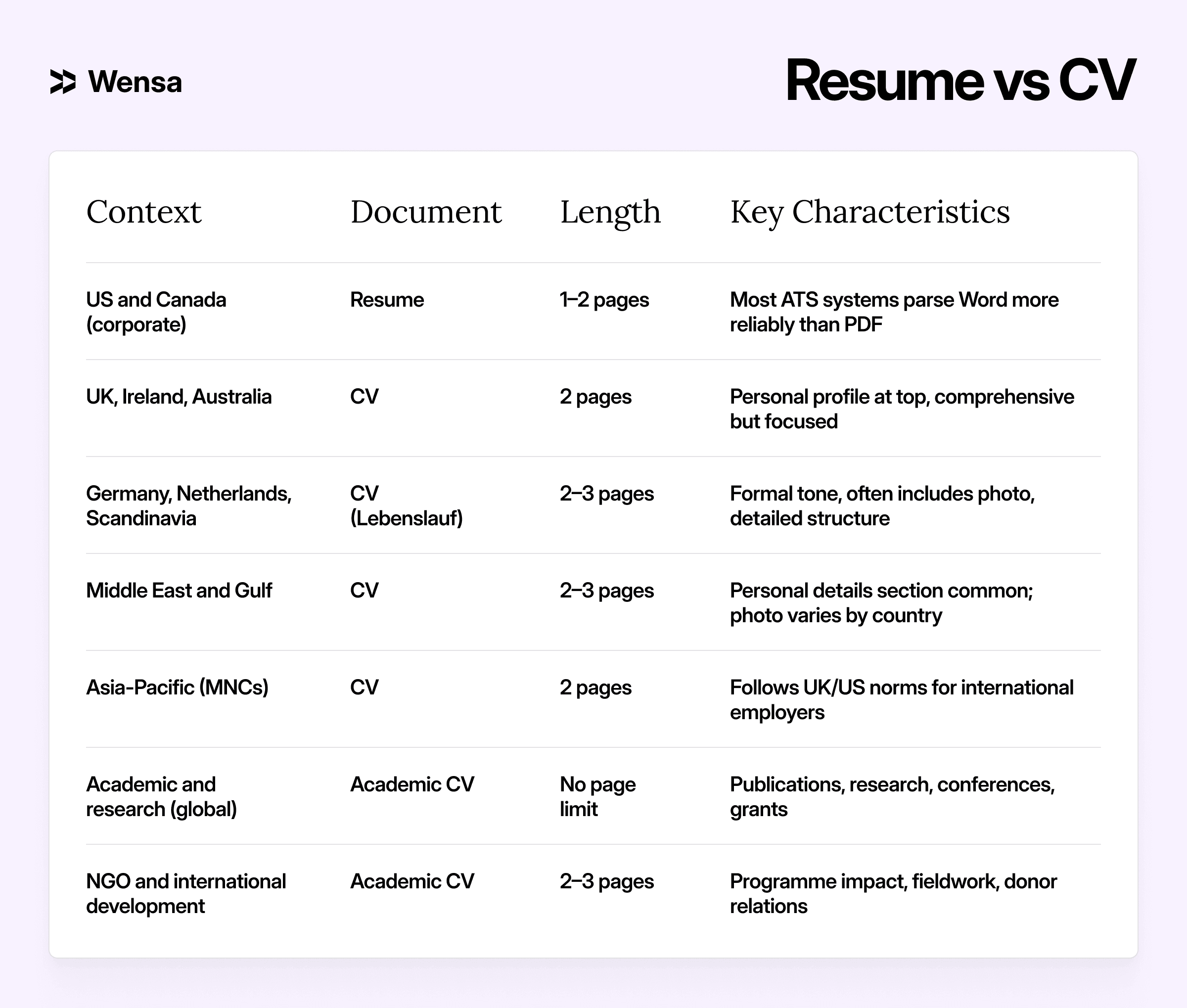
If you're applying to US or Canadian corporate roles, you need a resume — see our resume templates. Want to see how professionals in your field structure their CVs before choosing a template? Browse our CV examples by profession for real-world reference.
CV Templates by Country and Target Market
The same document that lands interviews in London will look underdressed in Frankfurt and overdone in Tokyo. CV conventions vary significantly by geography — here's what each major market actually expects.
United Kingdom and Ireland
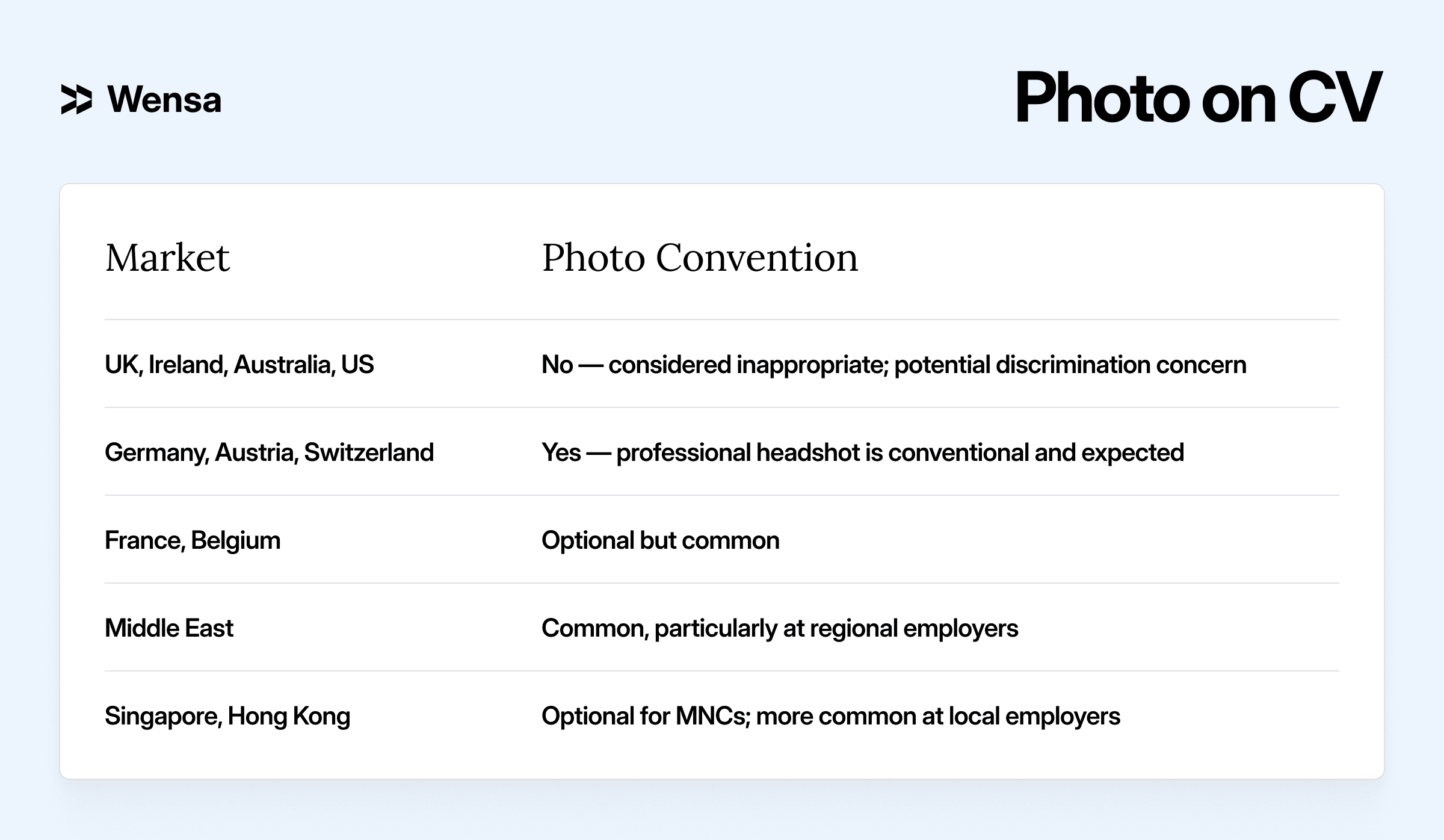
Two pages. Personal profile at the top. No photo.
A personal profile of three to four lines is expected — not optional. Employment history runs reverse chronological, with achievement-focused bullet points. Education goes below experience for anyone with more than three years of work history.
UK hiring managers will notice if the personal profile is missing. It's the first thing they read.
Germany, Austria, and Switzerland (DACH)
Two to three pages. Professional photo expected. Formal tone throughout.
The Lebenslauf format is the standard. A personal data section — name, date of birth, nationality, address — is conventional for local companies. A professional CV template gives you the right structural foundation; the photo and personal data section are added on top.
Australia and New Zealand
Two to three pages. No personal details beyond contact information.
Structure is similar to UK norms, but the tone is more direct and writing is expected to be tighter. Australian anti-discrimination law means date of birth, nationality, and marital status should be omitted unless specifically required.
Results-focused bullet points carry more weight in Australia than anywhere else in the English-speaking market.
Middle East and Gulf Region
Two to three pages. Photo common, personal details often expected.
International companies in the region largely follow global CV norms. Regional employers vary more — research sector-specific conventions before applying, as expectations here diverge more than in Western markets. Nationality may be a required field in some application portals.
Asia-Pacific: Singapore, Hong Kong, India
Two pages at MNCs. Local companies vary widely.
Singapore is the most internationally aligned market in the region — two pages, results-focused, standard clean structure works well. Hong Kong MNCs follow similar expectations. India's tech sector applies US resume conventions more closely than traditional CV format — worth confirming before applying.
CV Length, Photo, and Personal Details: International Standards
How long should a CV be?
The right length depends on your experience level and target market. If you're uncertain whether to apply a chronological or functional structure within that length, our resume and CV format guide covers the options and when each works best.
Early career (under 3 years): 1–2 pages. Many international graduate schemes specifically request one page as a filtering mechanism.
Mid-career (3–10 years): 2 pages is the standard expectation across UK, Europe, Australia, and Asia-Pacific.
Senior and leadership roles: 2–3 pages, with extra space used for leadership scope and significant achievements — not an exhaustive job history.
Academic CVs: No page limit. Publications, research, conferences, grants, and teaching experience all belong here.
Should I include a photo on my CV?
What personal details should I include?
Always include: full name, professional email, phone number, city and country, LinkedIn URL or portfolio link. For UK, Australian, and US-aligned applications, stop there. For German, Middle Eastern, and some Asian applications to local employers, date of birth and nationality may be expected — research the specific employer before adding personal details that aren't required.
ATS for International CV Applications
ATS-based screening is no longer a US-only practice. SAP SuccessFactors, Oracle Taleo, Workday, and Greenhouse are used by major employers across Europe, the UK, Asia-Pacific, and the Middle East. The same formatting rules that apply in the US apply globally — clean structure, standard section headings, no text boxes or embedded graphics. For a comprehensive content-level ATS optimization guide, see our ATS tips for 2026.
International CVs introduce additional considerations that US-focused ATS guidance doesn't cover:
Qualification naming: Spell out international credentials in full — "Association of Chartered Certified Accountants (ACCA)" not just "ACCA"
Date formats: Use unambiguous formats such as January 2023 – March 2025. Day/month/year vs month/day/year ambiguity creates parsing errors across regional systems
Language skills: List languages with proficiency levels in a dedicated section — many global ATS systems filter specifically on language capability
Non-Latin characters: Use standard system fonts throughout; decorative typefaces may not handle diacritics correctly across all platforms
All CV templates at Wensa use clean paragraph formatting, conventional section labels, and standard fonts — making them compatible with every major global ATS platform out of the box.
Frequently Asked Questions About CV Templates
What is the difference between a CV and a resume?
A CV is a comprehensive document covering your full career history, education, publications, and qualifications — standard in the UK, Europe, academic contexts, and most international markets. A resume is a concise, role-specific document of one to two pages, standard in the US and Canada. If you're applying to US or Canadian corporate employers, you need a resume, not a CV.
How many CV templates does Wensa have?
Over 120 CV templates across 11 categories. 16 are completely free with no watermarks and no hidden cost. The full collection spans simple, professional, modern, ATS-optimized, and creative designs, available in Word, PDF, and Google Docs formats.
Which CV template works best for UK jobs?
A clean two-page template with a personal profile section at the top, reverse-chronological work history, and no photo. The professional and simple categories both match UK hiring expectations. Before building, check our CV examples for your specific profession to see how UK candidates in your field structure their applications.
Do I need a different CV for different countries?
Yes, typically. The core content can remain the same, but length, photo convention, personal details, and tone vary by market. The most significant differences are between UK/Australia-style CVs (no photo, concise, achievement-focused) and German or Middle Eastern CVs (photo common, personal details included, more formal structure). Google Docs makes managing multiple market-specific versions particularly easy.
I've never written a CV before — where do I start?
Start with the simple or free category from the grid above. Then use our step-by-step writing guide alongside the template — it walks through every section from personal profile to skills. Everything you need is on Wensa.
Recruiter Approved
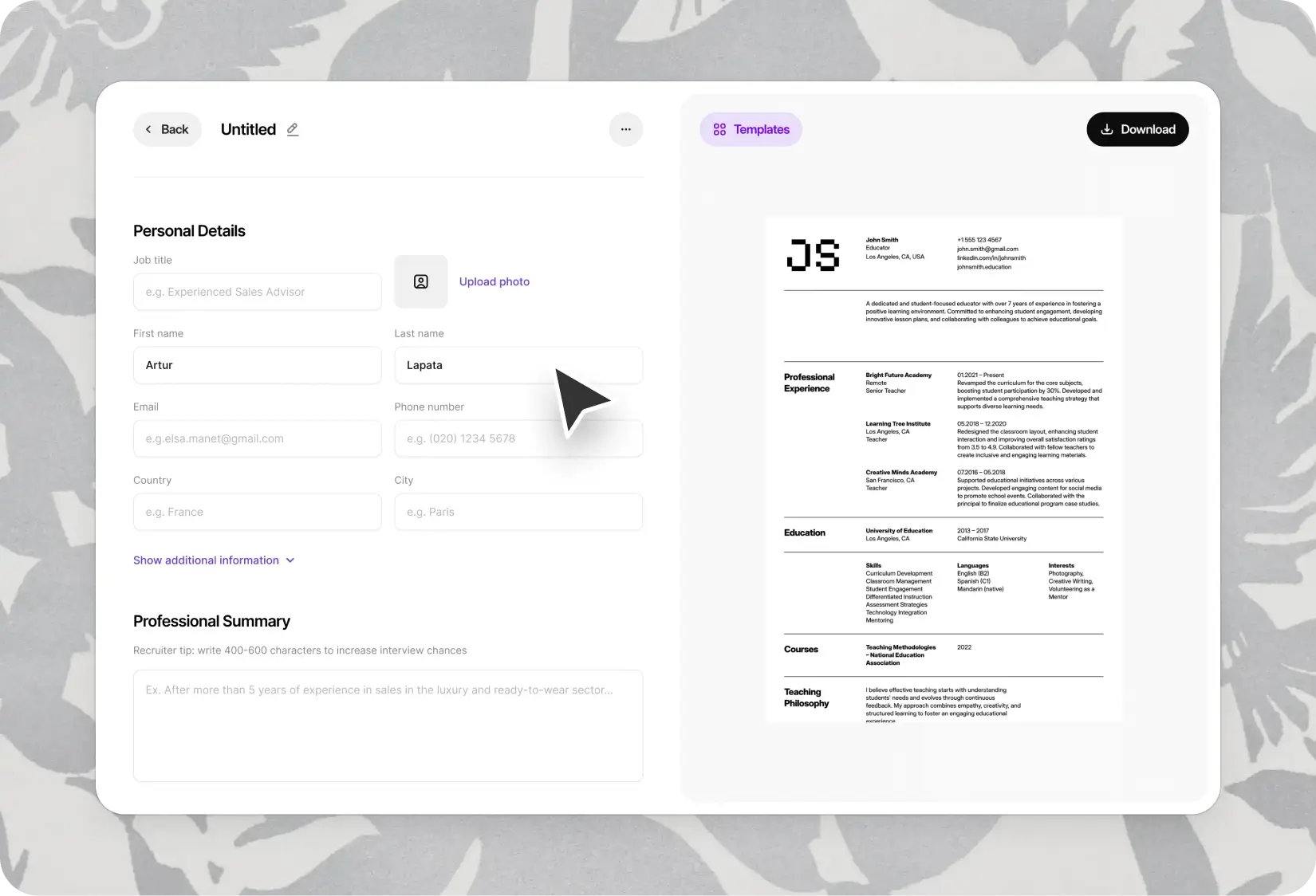
Build a Resume That Works. Literally.
Our templates are designed to get you noticed, shortlisted, and hired — fast.
Have More Questions?
What is a resume builder?
A resume builder is an online tool that helps you create professional, job-ready resumes quickly. It guides you through each section and offers templates optimized for recruiters and Applicant Tracking Systems (ATS). Try our online resume builder to get started in minutes.
Do I need a resume and a CV? What’s the difference?
How do I choose the best resume format?
Are your templates ATS-friendly?
Can I download my resume as a PDF?
Can I use the builder on mobile?
What should I include in my resume?
Do you offer resume examples by profession?
Is it safe to store my resume on your platform?
Will my resume be shared or published?
Can I update my resume later?
How do I write a resume with no experience?
How long should my resume be?
What makes your resume builder better than others?
How often should I update my resume?