CV vs Resume in 2025: How to Know Which One to Use (With Examples)
Learn the key differences between a CV and a resume in 2025. Includes examples, formats, and tips on when to use each for U.S. or international jobs.


Updated Dec 5, 2025
Read
10 min
When you’re applying for jobs, one question pops up a lot: should I send a CV or a resume?
The terms aren’t always interchangeable.
Choosing the right document is key to a successful job search. Hiring practices are changing, and global opportunities are growing. So, knowing what to use can make a big difference.
Which one you choose depends on your career stage, industry, and location.
This guide highlights the differences and explains when to use each option. It also shows what to include to meet 2025 standards.
What Is the Difference Between a CV and a Resume (The key distinction)
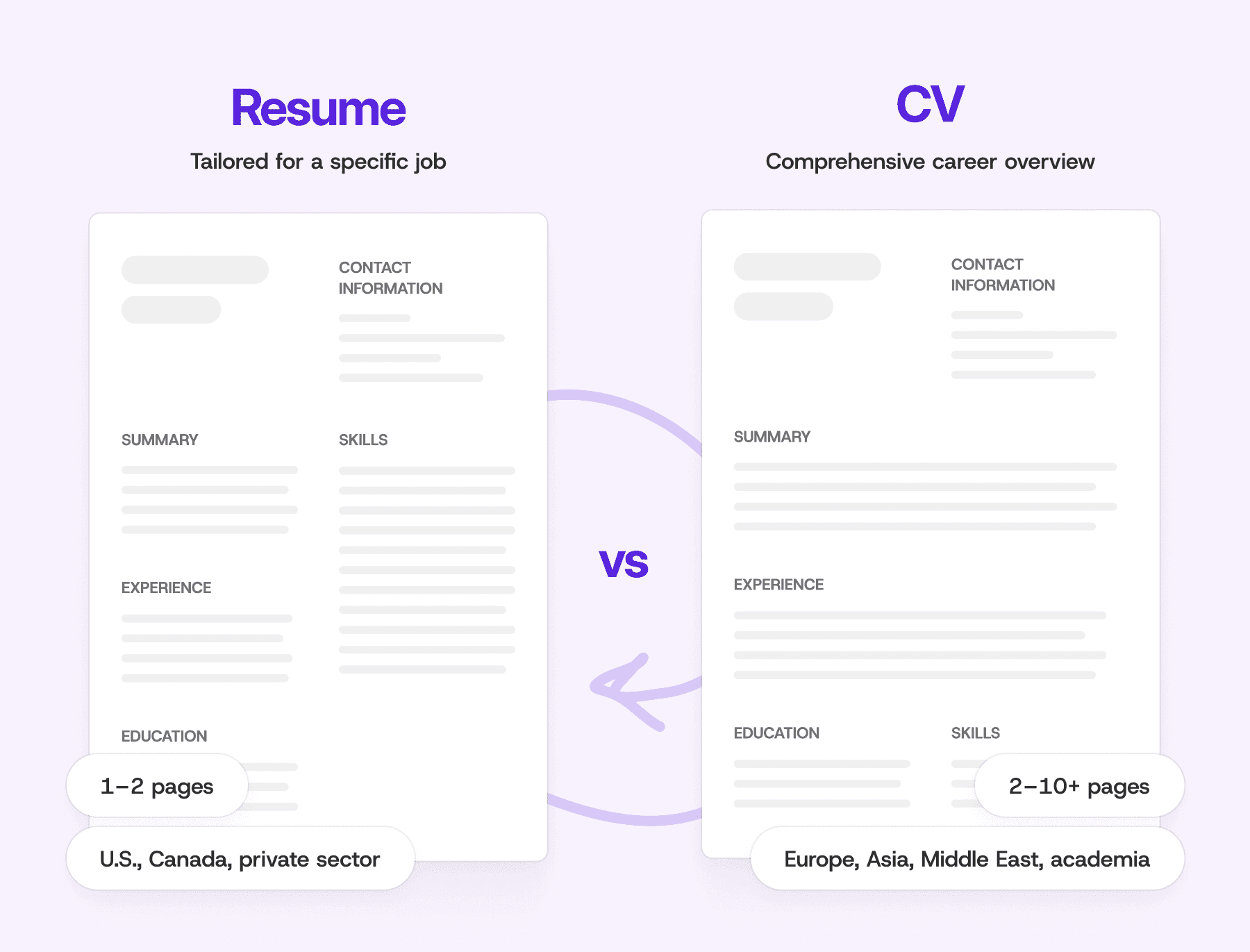
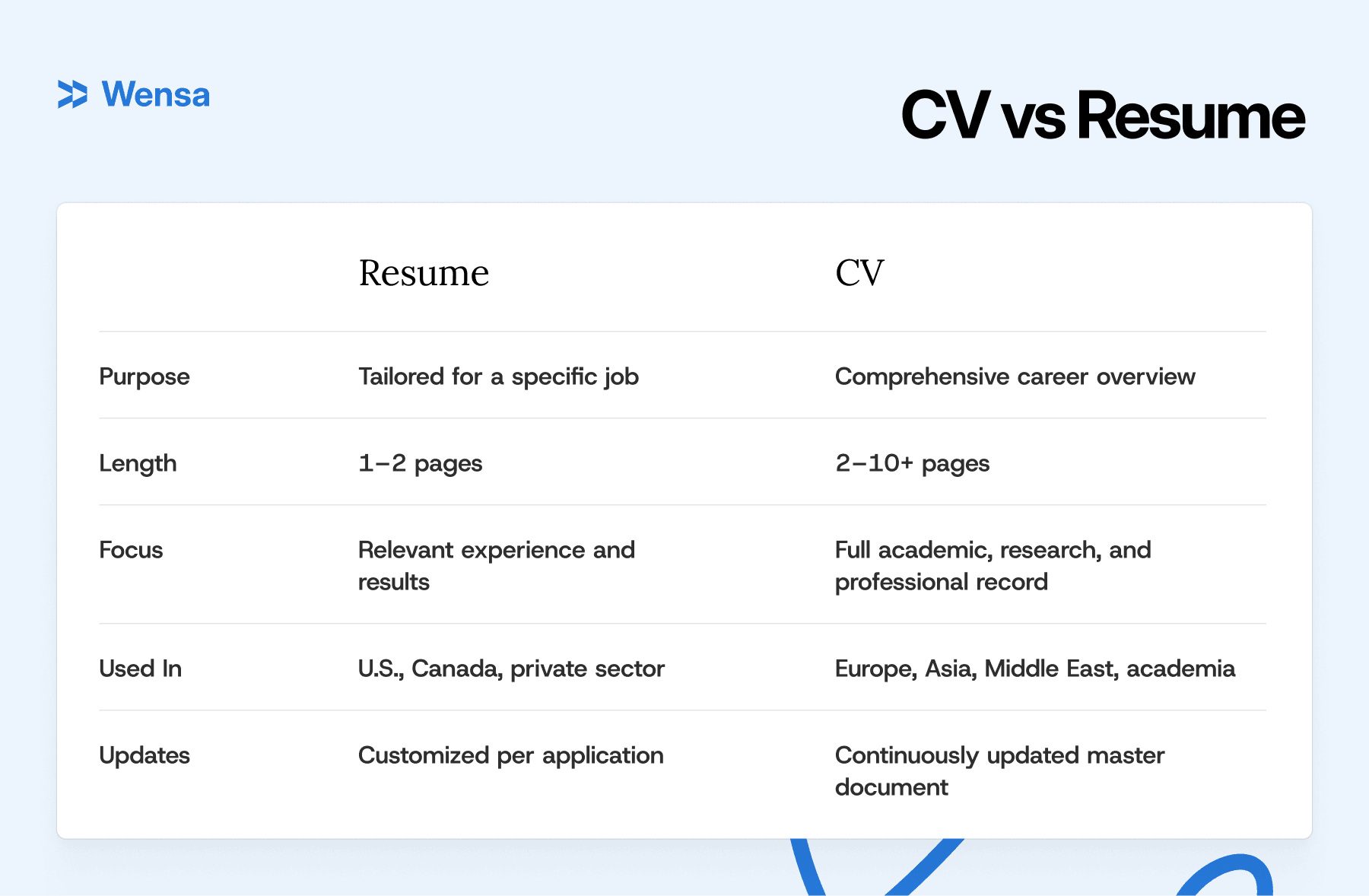
The main difference is scope and purpose.
Resume: A short, targeted summary of your experience, skills, and achievements. Usually 1–2 pages.
CV (Curriculum Vitae): A complete record of your career and academic history. Often several pages. Common in academia, research, and international roles.
In short:
A resume shows why you’re right for one job.
A CV shows your full career story.
Resumes help recruiters quickly see if you fit a role. CVs give a detailed view for academic or research positions. Knowing the difference helps you send the right document every time.
CV vs Resume: Quick Comparison
When to Use a Resume vs. a CV
Use a Resume When:
Applying for jobs in the U.S. or Canada
Targeting corporate, tech, or creative roles
You want to highlight measurable achievements
The job posting asks for a resume
Use a CV When:
Applying to academic or research positions
Pursuing grad school, fellowships, or international roles
You need to show publications, teaching, or grants
CV vs Resume Format: What to Include in Each
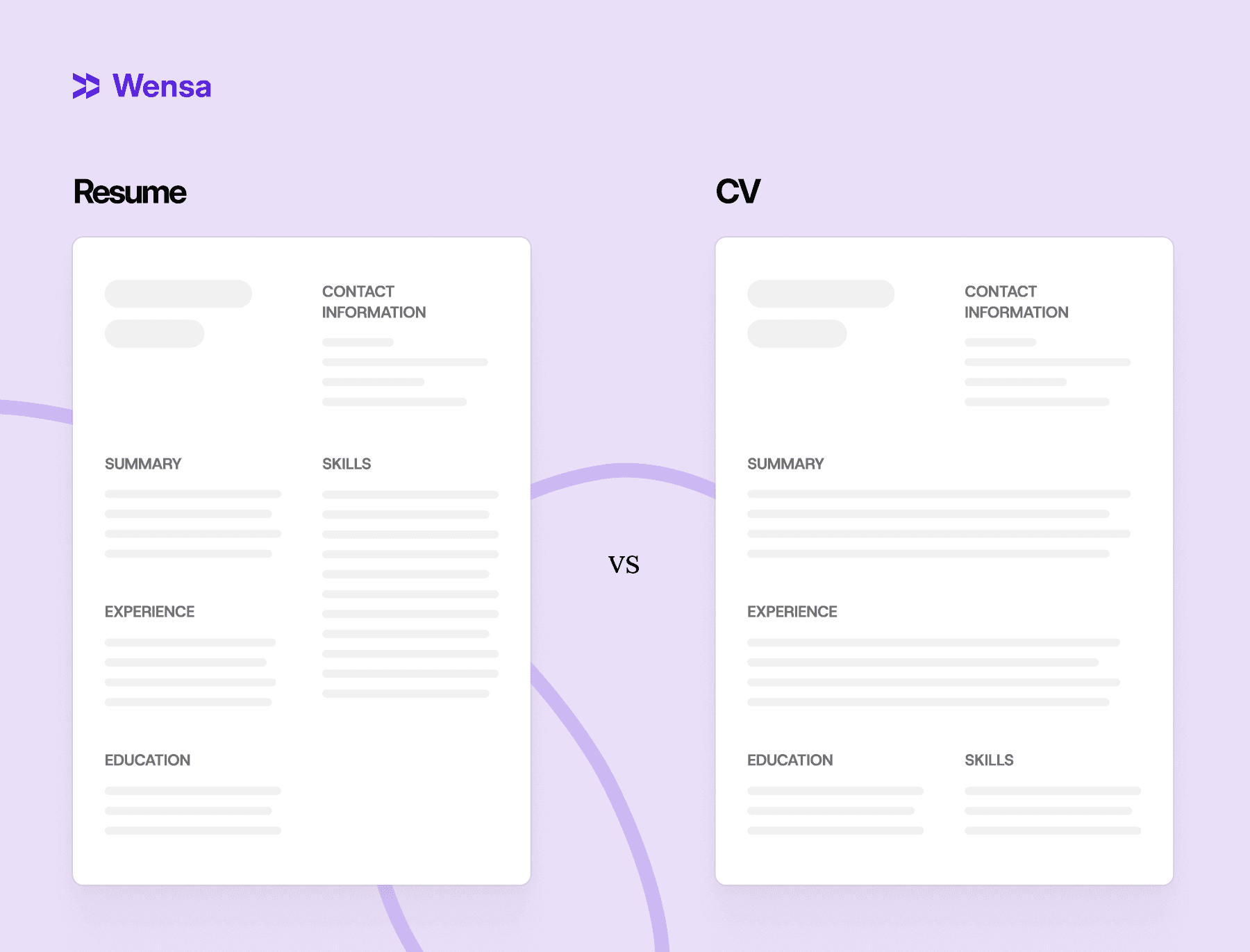
Resume Format (2025 Standard)
Resumes are short, scannable, and tailored for each job.
Typical Sections:
Header: Contact information + LinkedIn
Professional Summary (1–3 sentences)
Key Skills (Focused on the role)
Work Experience (reverse chronological)
Education
Optional: Certifications, Projects, Awards
Pro Tip: For layout ideas, check Best Resume Format in 2025: Chronological vs Functional vs Hybrid.
CV Format (Academic or International)
CVs are more detailed and less tailored.
Full Education History (including thesis/dissertation topics)
Research & Teaching Experience
Publications, Grants, and Presentations
Professional Memberships
Awards and Fellowships
References
CVs are kept current rather than customized for each job.
Length: How Long Should a CV or Resume Be?
Resume: 1–2 pages, focus on information relevant to the job.
CV: No strict limit. Include your entire academic and professional history.
Examples: Resume vs CV
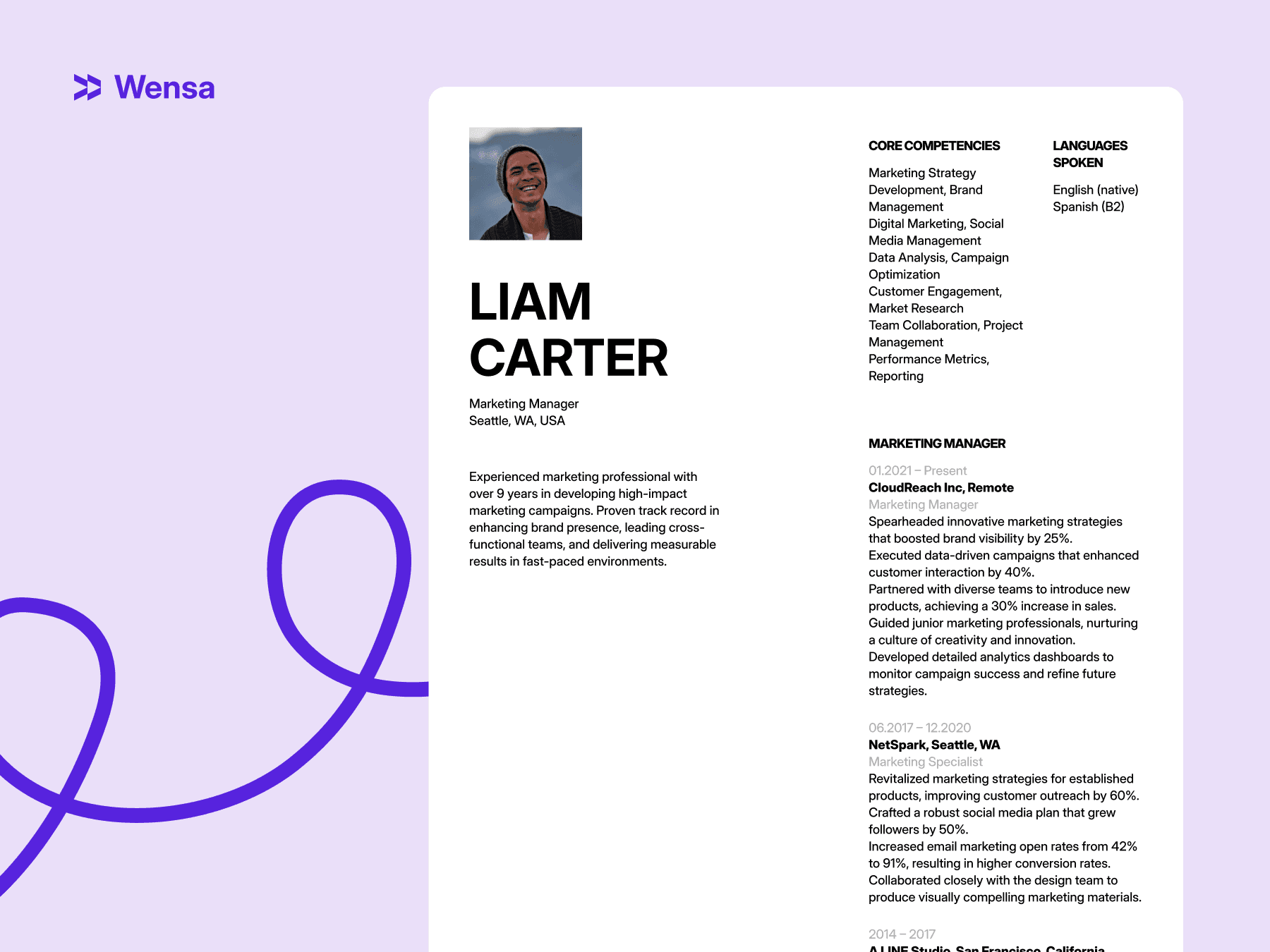
Here’s how the same experience could appear in each format:
Resume Example (Concise and Results-Oriented) Marketing Manager | ABC Agency | 2020–Present
Increased digital campaign ROI by 38% through data-driven audience segmentation
Managed a cross-functional team of 7 across three major product launches
Streamlined monthly reporting workflows, saving 10+ hours per month
Collaborated with creative and analytics teams to align strategy and performance goals
Why it works: This resume highlights impact. It shows measurable results, action verbs, and clear outcomes. It’s short, punchy, and designed to grab a recruiter’s attention in seconds.
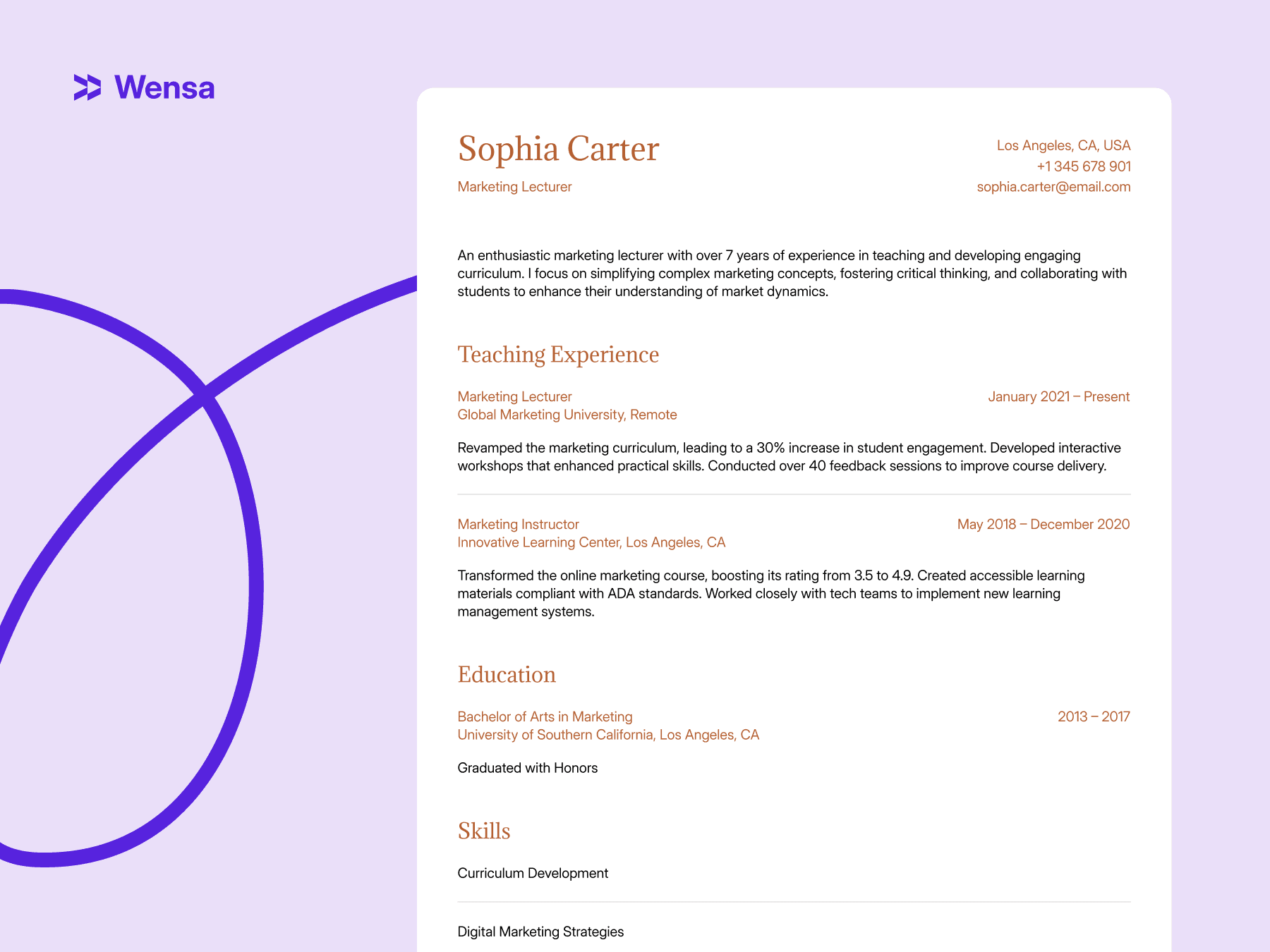
CV Example (Detailed and Academic-Focused) Marketing Lecturer | ABC University | 2020–Present
Teach undergraduate courses in Marketing Analytics and Digital Strategy, incorporating real-world case studies from agency work
Published three peer-reviewed articles on consumer behavior and data-driven marketing
Presented at the 2024 International Marketing Conference on cross-channel advertising performance
Supervised four master’s theses related to digital marketing metrics and campaign optimization
Developed a new course module integrating social media analytics tools (Google Analytics, Meta Ads Manager)
Why it works: This CV version provides depth and context. It focuses on teaching, research, and contributions to academics, not on performance metrics. Each point adds credibility and shows a career built on scholarship and expertise.
Can You Use a Resume as a CV (or Vice Versa)?
You can adapt one for the other, but avoid using them as substitutes for each other.
Resume → CV:
Add detailed context for each role
Include publications
Include research projects
Include academic projects
CV → Resume:
Shorten to 1–2 pages.
Emphasize recent relevant experience.
Highlight achievements, not just responsibilities.
Keeping both updated means you’re ready for any opportunity.
Common Mistakes to Avoid
Avoid these pitfalls when deciding between a CV and a resume:
Sending a CV for a U.S. corporate job.
A long academic-style CV can overwhelm hiring managers in the private sector.
Instead: Use a one- to two-page resume focused on results, metrics, and recent experience.
Sending a one-page resume for academic or research roles.
These fields expect detailed documentation of your background and publications.
Instead: Create a comprehensive CV that includes research projects, publications, and academic service.
Listing irrelevant publications or coursework for business roles.
Including unrelated details can distract from your core strengths.
Instead: Customize your resume to highlight skills, results, and projects that match the job description.
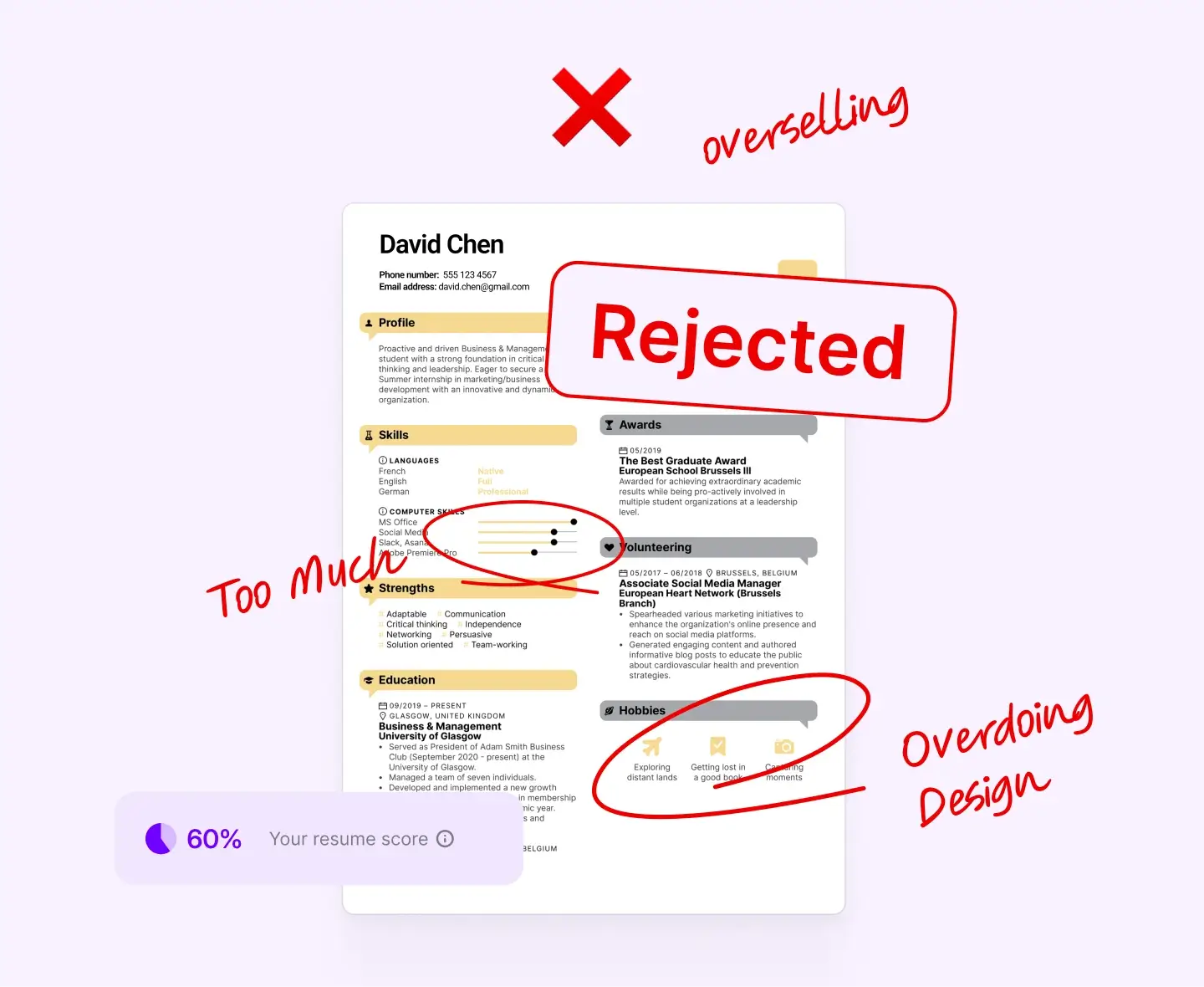
Using generic templates that don’t match the job or region.
One-size-fits-all designs may look outdated or fail ATS scans.
Instead: Pick modern, ATS-friendly templates that match your industry's style. Creative fields can use bold visuals. However, corporate roles benefit from clean, simple designs.
When in doubt, research job listings in your field or review employer instructions closely.
FAQs — CV vs Resume
What’s the difference between a CV and a resume?
A resume highlights relevant experience; a CV is a full career and academic record.
Is a CV longer than a resume?
Yes. CVs can span multiple pages, while resumes should stay within 1–2 pages.
Should I use a CV or a resume when applying in the U.S.?
Use a resume for most U.S. jobs — CVs are mainly for academia or research.
Can I use my resume as a CV?
Yes. You can expand it into a CV by adding publications, detailed education, and research experience.
Conclusion — Choose the Right Document for the Right Opportunity
In 2025, the difference between a CV and a resume is more than length — it’s about purpose, precision, and presentation.
Use a resume when applying to professional, private-sector roles that value concise impact.
Use a CV for academic, research, or international applications that require depth and documentation.

Take a moment to reflect on your career. Then, choose the document that best shows your unique qualifications. When done right, each helps you stand out for the right reasons.
Want help building the right one?
Check out How to Write a Resume in 2025 (Step-by-Step Guide That Actually Works) or explore Wensa’s Resume Builder to create a version that fits your goals.
Teanca Holt is a recruiting expert and digital content writer from Utah with over five years of experience helping people craft resumes that get noticed. At Wensa, she shares practical tips on writing, career growth, and landing the job you want.