Data Science Resume Examples That Get Interviews (2026)
Real data science resume examples for analysts, engineers, and research roles. Explore how data scientists present technical work, quantify impact, and balance depth with clarity — and use these examples to build a resume that works in 2026.
Updated Feb 12, 2026
Written by Artur Lopato
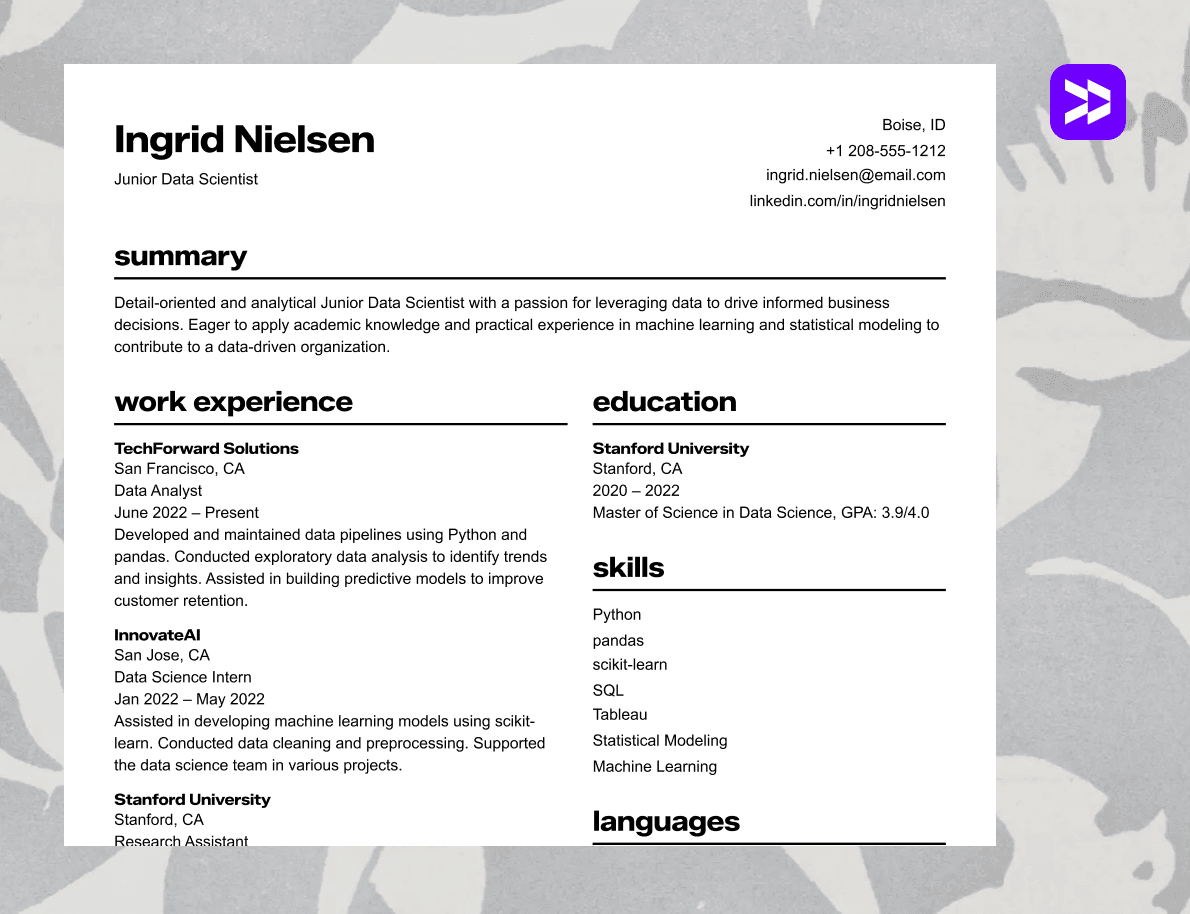
Over 70% of data science resumes get filtered out before a human ever reads them. Not because candidates lack skills — but because resumes fail to show what actually matters.
Data science hiring has shifted. Employers no longer just scan for Python or R. They look for proof you can translate complex analysis into business decisions, frame problems clearly, and communicate findings to non-technical stakeholders.
A strong data science resume answers three questions fast:
What problems have you solved? What methods did you use? And what changed because of your work?
What Makes Data Science Resumes Different
Data science sits at the intersection of statistics, programming, and business strategy. Your resume needs to reflect all three without overwhelming the reader.
The best resumes show technical depth through project outcomes, not skill lists. They explain models in terms of impact, not just algorithms. And they make it clear whether you lean toward research, production systems, or strategic analysis.
"Employers want to see how you think about data — not just what tools you know."
Before reviewing the examples, it helps to understand that recruiters typically decide in under 10 seconds whether your resume deserves a closer look. Clean structure, quantified results, and clear progression matter more than length.
If you're still shaping your layout or wondering how to balance technical detail with readability, starting from a proven ATS-friendly resume template can save time and prevent common formatting mistakes that cause automated rejection.
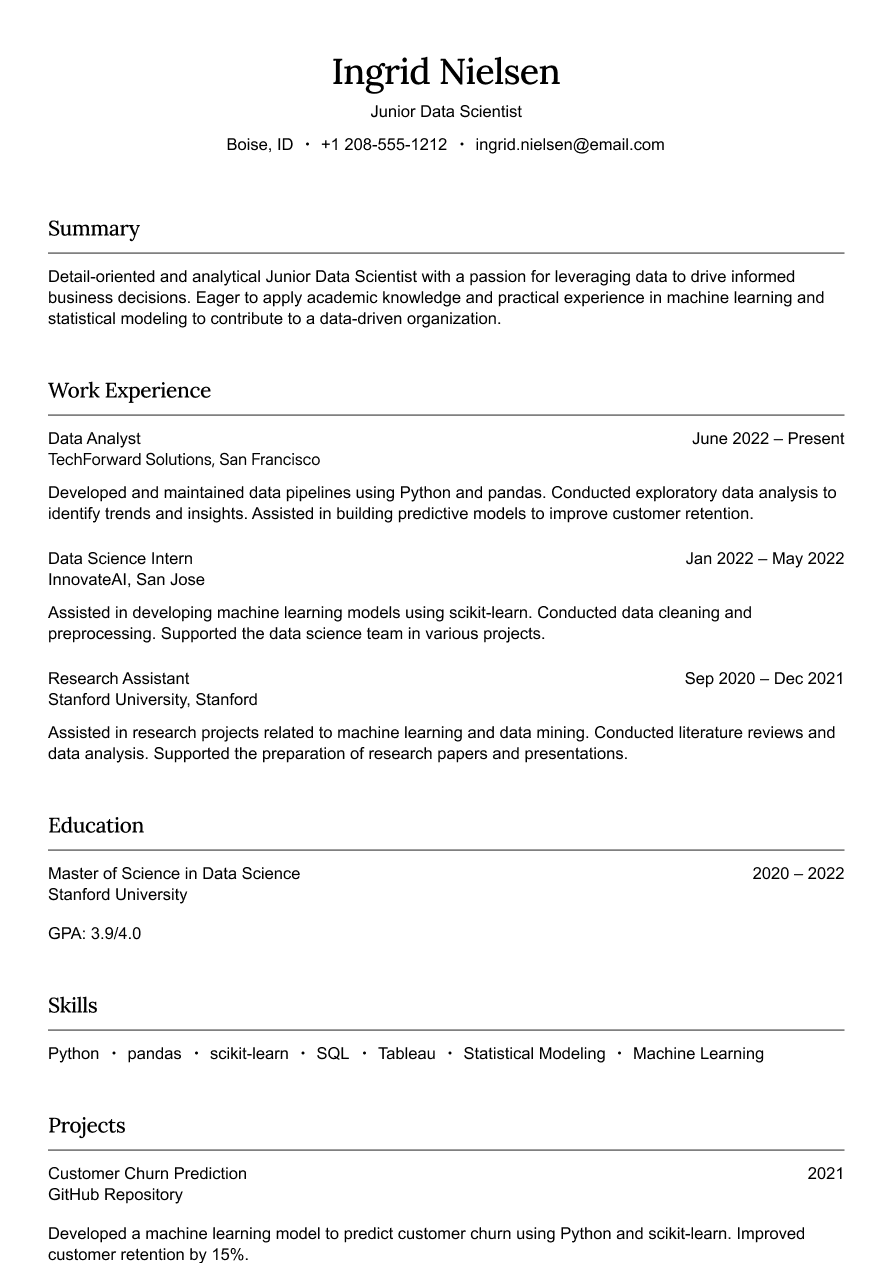
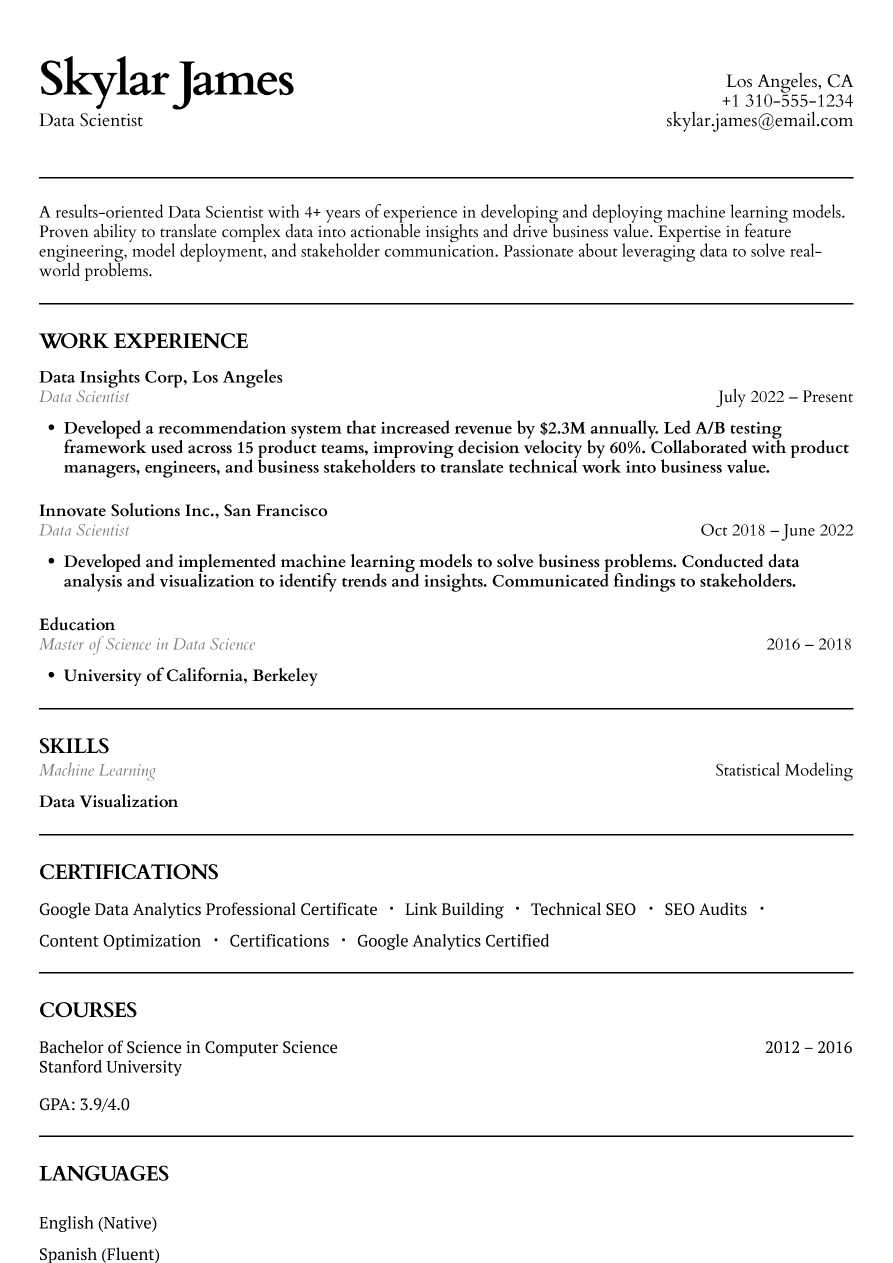
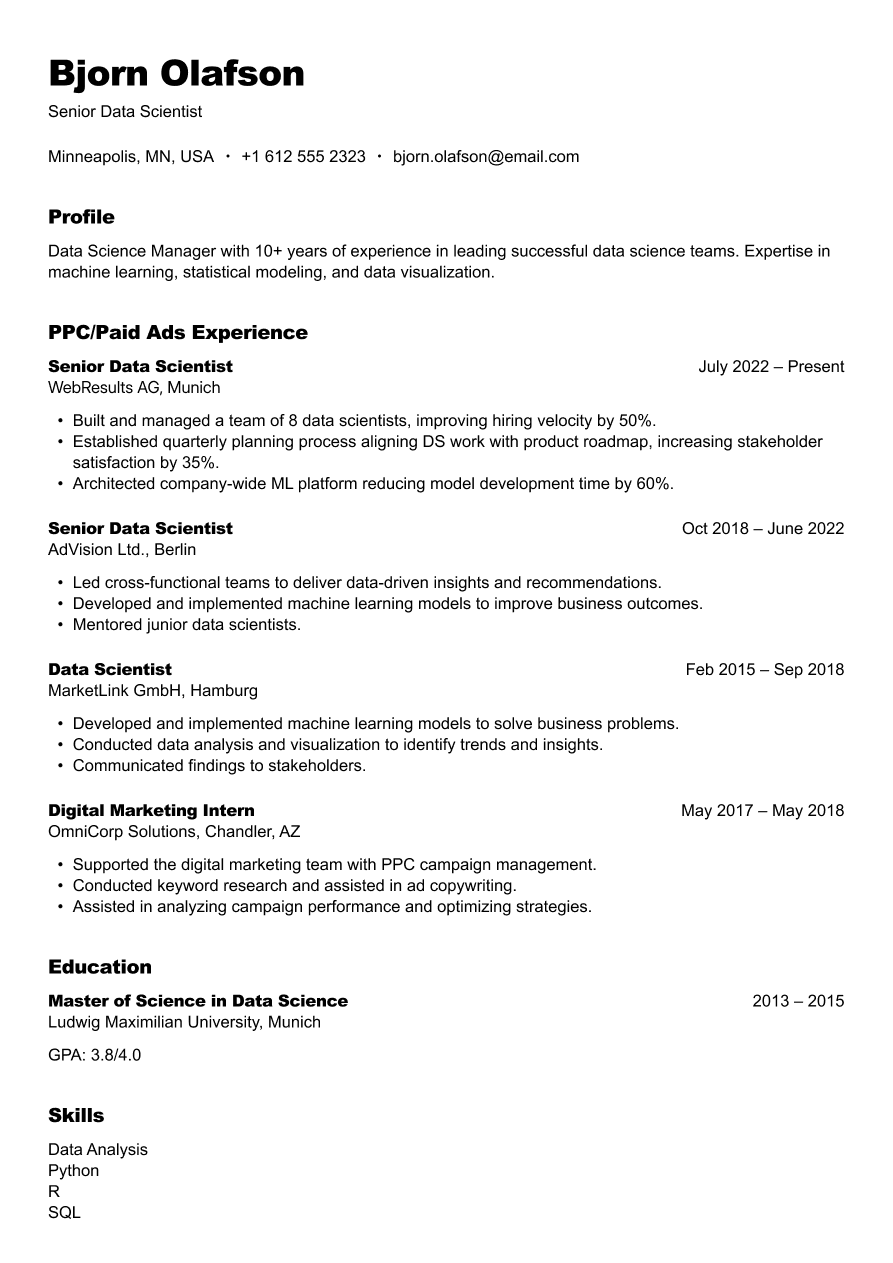
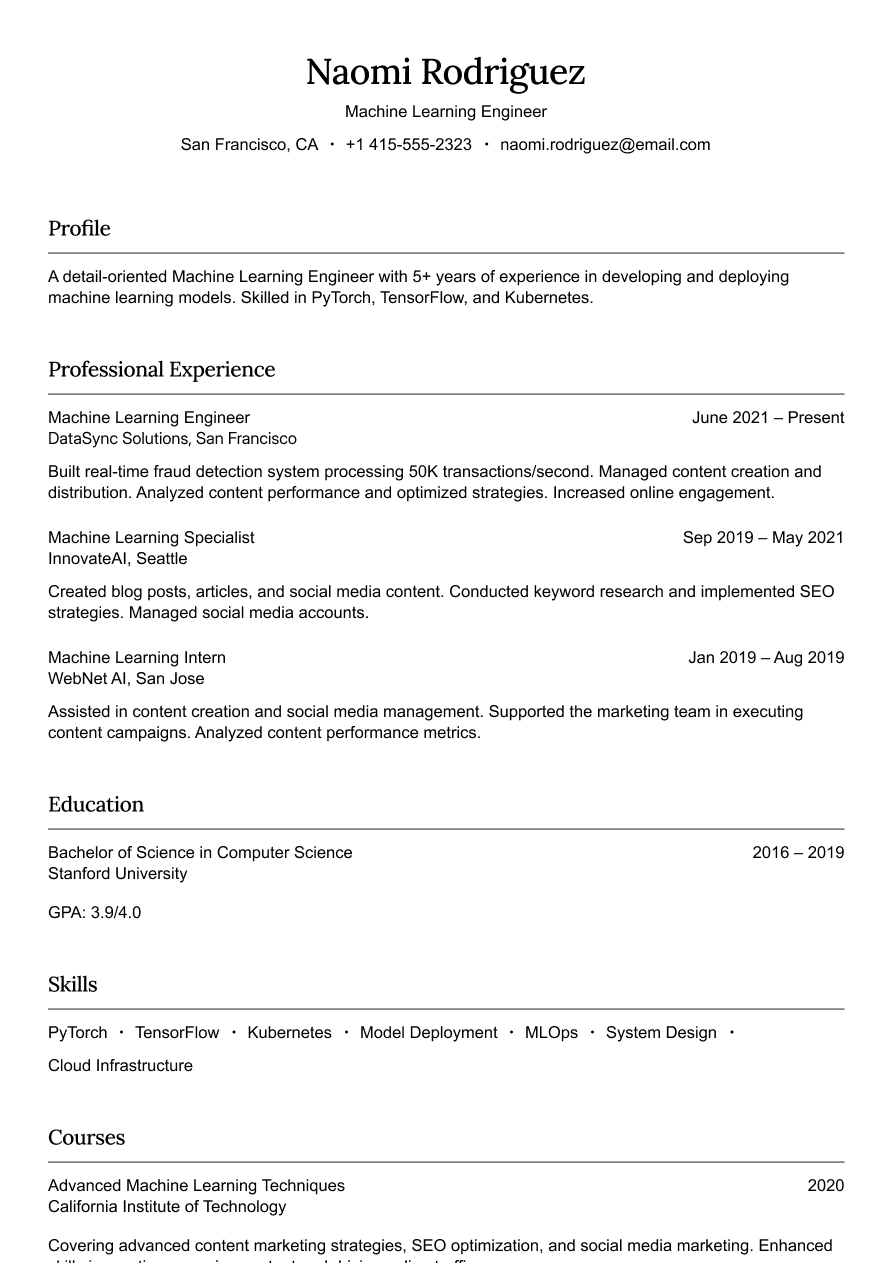
Data Science Resume Examples by Role and Experience
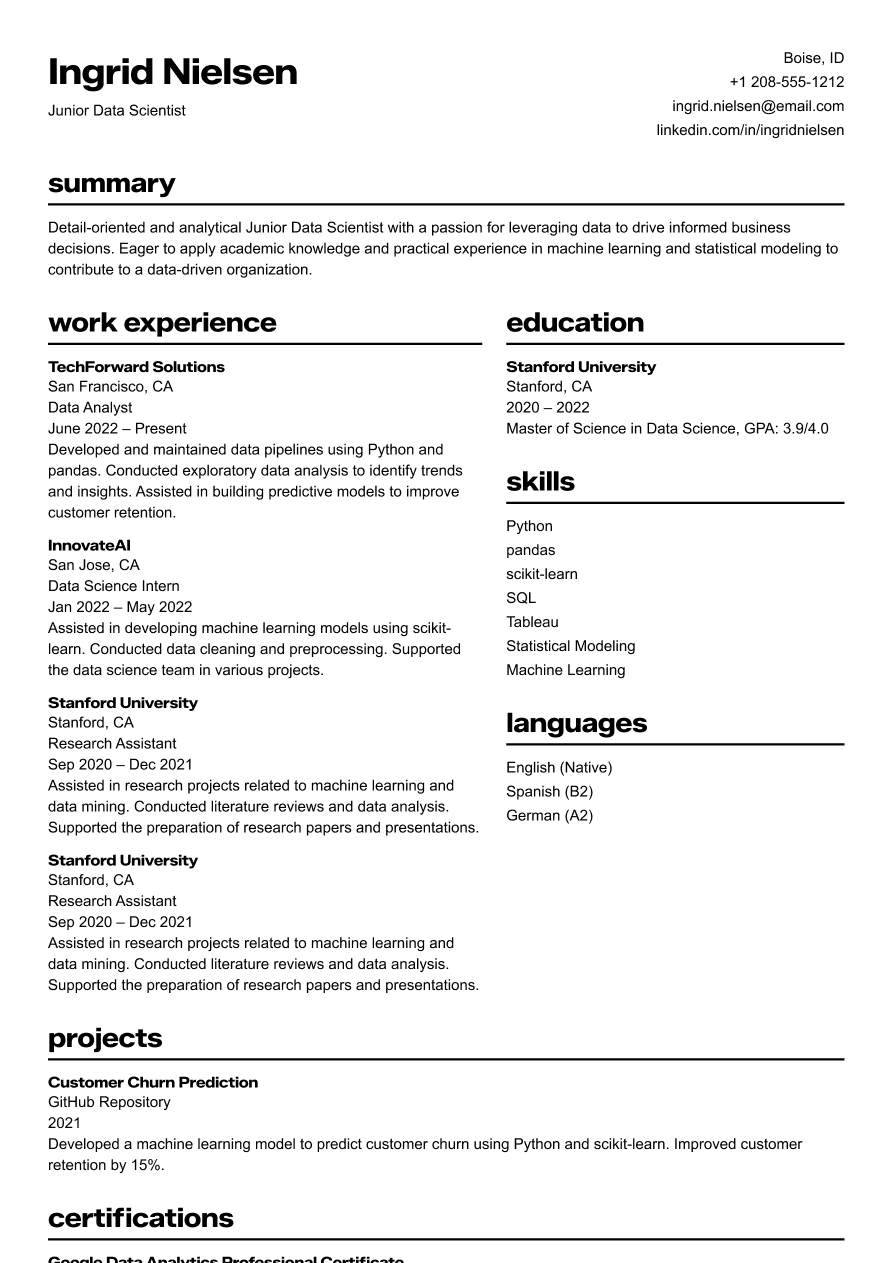
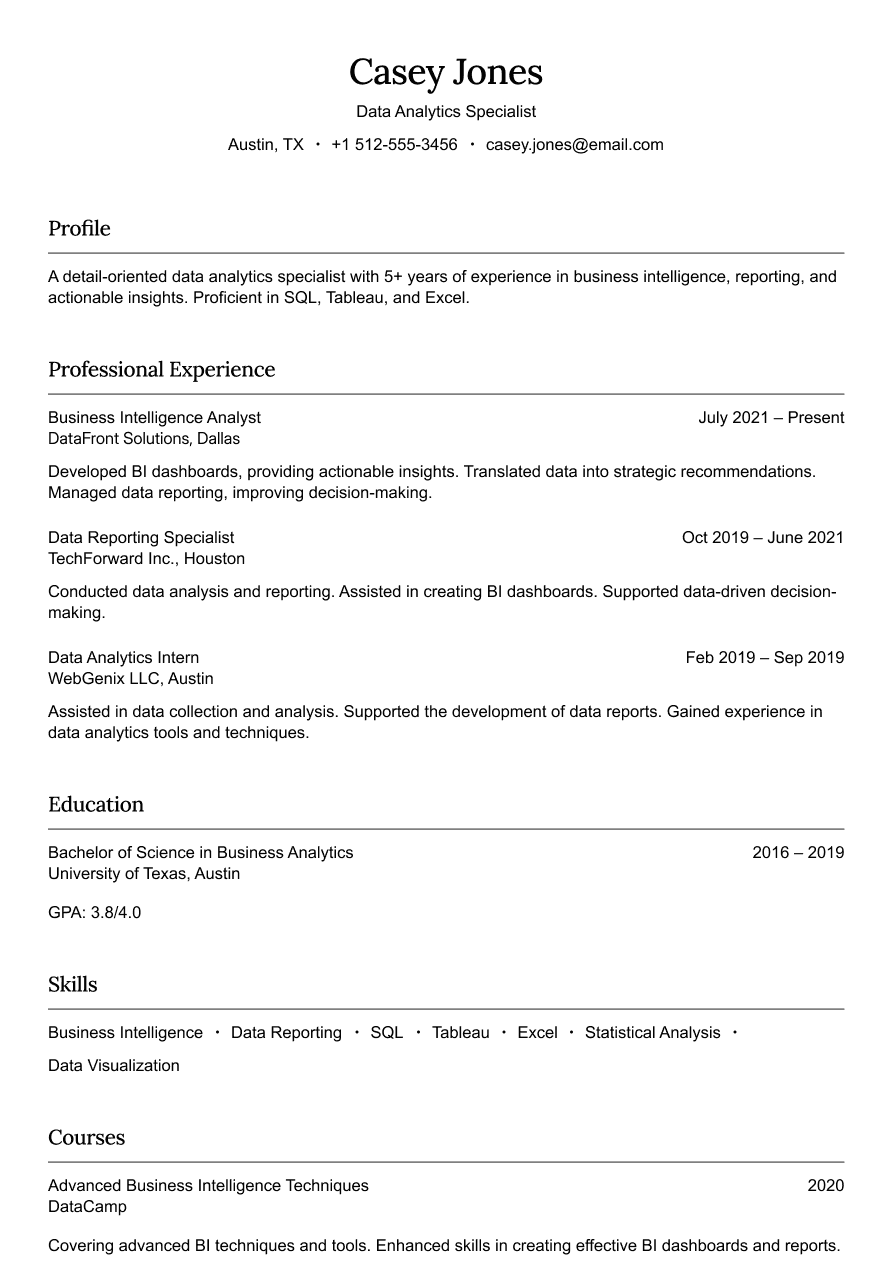
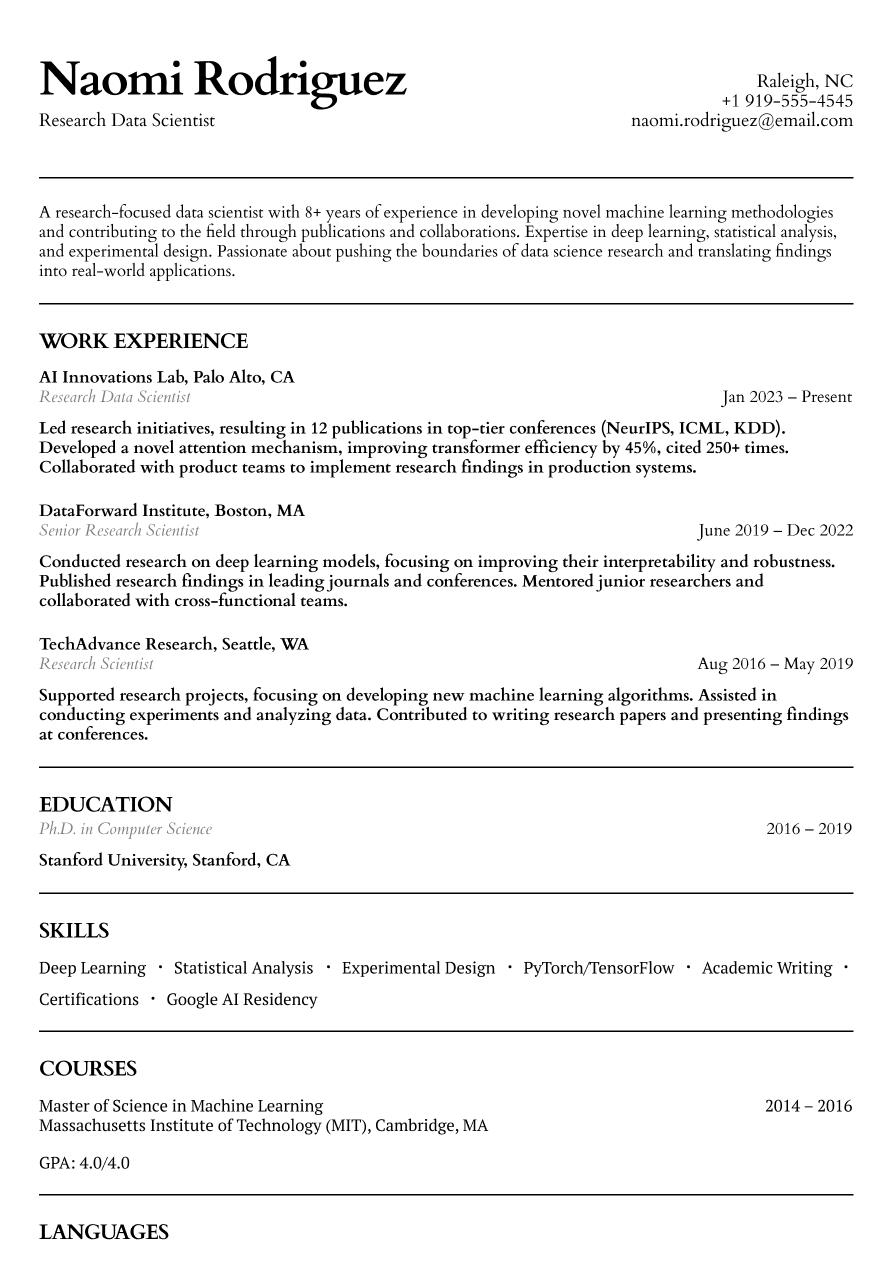
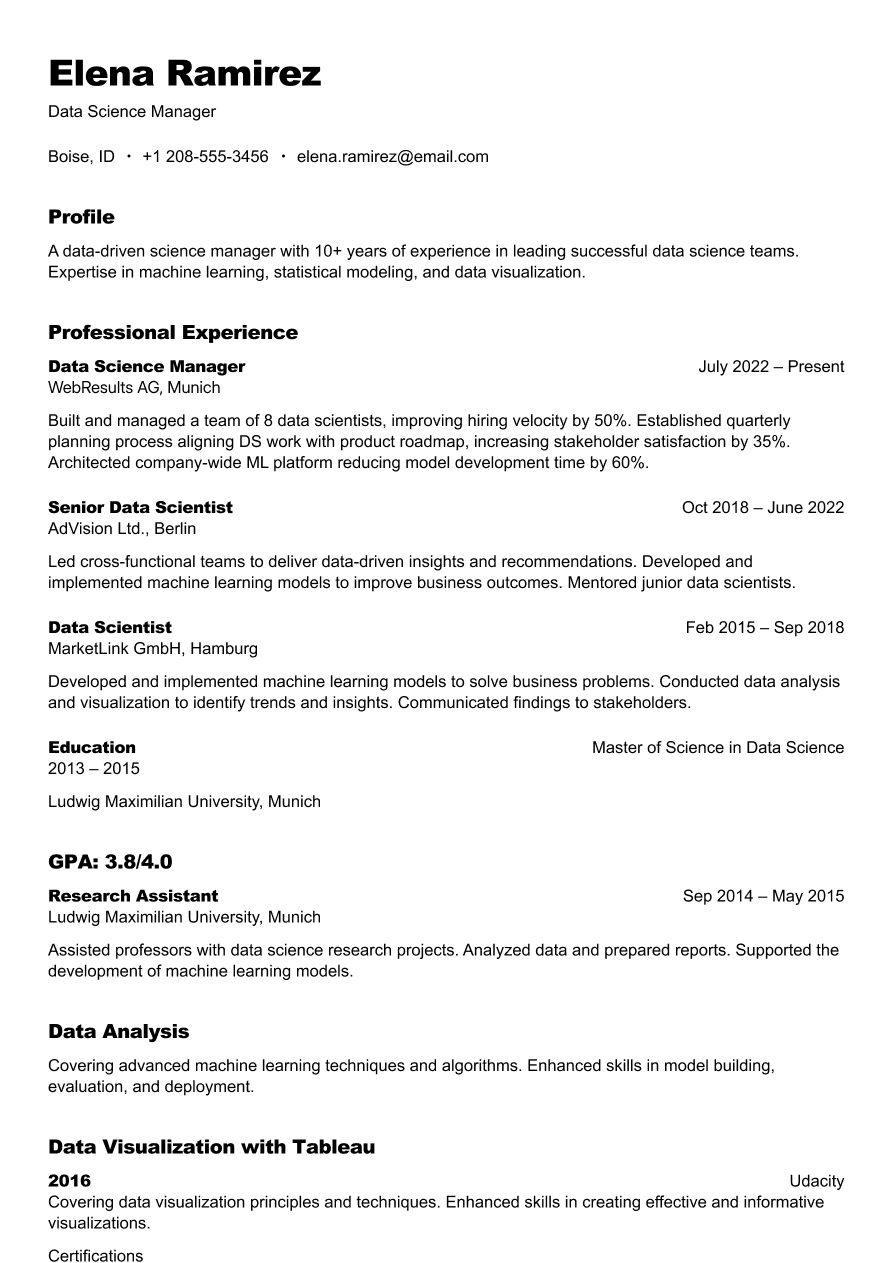
What Employers Actually Look for in Data Science Resumes
Data science recruiters scan differently than most hiring managers. They expect clarity around methodology, evidence of business impact, and proof you can work across technical and non-technical teams.
Strong resumes typically show:
Clear problem framing — what question you were answering
Specific methods — algorithms, frameworks, or statistical approaches used
Measurable outcomes — revenue impact, efficiency gains, accuracy improvements
Communication skills — how findings influenced decisions
Weak resumes list tools without context. Strong ones explain how you used those tools to solve real problems.
For guidance on structuring your entire resume, including how to organize technical projects and professional experience, see our complete guide on how to write a resume that balances technical credibility with readability.
How to Present Projects vs Experience
One of the biggest questions data scientists face: should you lead with projects or professional experience?
The answer depends on where you are in your career.
Experience Level | What to Emphasize |
|---|---|
Entry-level / Career switcher | Projects first — show you can deliver results |
2-4 years experience | Balance both — projects support job experience |
5+ years experience | Professional work first — projects optional |
When describing projects, avoid generic Kaggle examples everyone uses. Instead, show original thinking: unique datasets, custom approaches, or solutions to problems you identified yourself.
Each project description should include: the business question, data sources, methodology, and quantified outcome. Two to three sentences are usually enough.
Data Science Skills That Signal Real Experience
Skills sections fail when they become exhaustive lists. Recruiters call this skill vomit — and it weakens your resume rather than strengthening it.
A better approach: only list skills you'd be comfortable using in a technical interview within the next week.
Organize skills into clear categories:
Programming: Python, R, SQL (specify proficiency level)
Machine Learning: Specific frameworks you've shipped with (TensorFlow, PyTorch, scikit-learn)
Data Infrastructure: Cloud platforms, databases, pipeline tools you've actually built on
Visualization: Tools used to communicate findings (Tableau, matplotlib, D3)
If you need help deciding which skills to feature or how to structure them effectively, our guide on writing a resume skills section explains what recruiters scan for first.
Data Science Resume FAQ
Q: Should I include all my technical skills on my data science resume?
No. Only list skills you've used in production or projects within the last year and feel confident discussing in depth. A focused skills section of 8-12 items typically performs better than an exhaustive list of 30+ technologies you've barely touched.
Q: How much technical detail should I include when describing models?
Enough to show competence, not so much that non-technical readers get lost. Mention the algorithm or approach, but emphasize the problem it solved and the business outcome. For example: "Built random forest classifier achieving 92% accuracy, reducing false positives by 35% and saving $200K annually."
Q: Do GitHub projects matter as much as work experience?
For entry-level roles, yes — they prove you can execute. For mid-level and senior positions, professional experience takes priority, but unique or well-documented projects can still differentiate you. Avoid listing generic tutorial projects or common Kaggle competitions.
Q: Should data scientists use a one-page or two-page resume?
One page works for entry-level and early-career candidates. Two pages are acceptable for experienced data scientists with substantial project portfolios or publications. If using two pages, ensure the first page contains your strongest material — many recruiters never scroll.
Q: How do I show impact when my work was exploratory or research-focused?
Frame exploratory work in terms of what it enabled. Did your analysis inform a product decision? Change a strategic direction? Validate or disprove a hypothesis? Even negative results have value if they prevented costly mistakes. Quantify whenever possible, even if it's "analyzed 10M records" or "reduced model training time by 60%."