Project Manager Resume Examples That Get Results (2026)
Project manager resume examples for entry-level, senior, and specialized roles. See how PMs showcase leadership, budget management, and on-time delivery — and use these examples to build a resume that lands interviews in 2026.
Updated Mar 6, 2026
Written by Artur Lopato

Most project manager resumes get rejected before a human ever reads them. Not because candidates can't lead projects — but because resumes fail to prove what actually matters: delivered results, managed budgets, and teams that hit deadlines.
Hiring managers scan hundreds of PM resumes for each opening. They're looking for three signals immediately: quantified project outcomes, evidence of cross-functional leadership, and proof you can navigate complexity without losing control.
A strong project manager resume doesn't list responsibilities. It demonstrates impact through specific numbers, clear scope, and measurable business results.
Why Project Manager Resumes Fail (And How to Fix It)
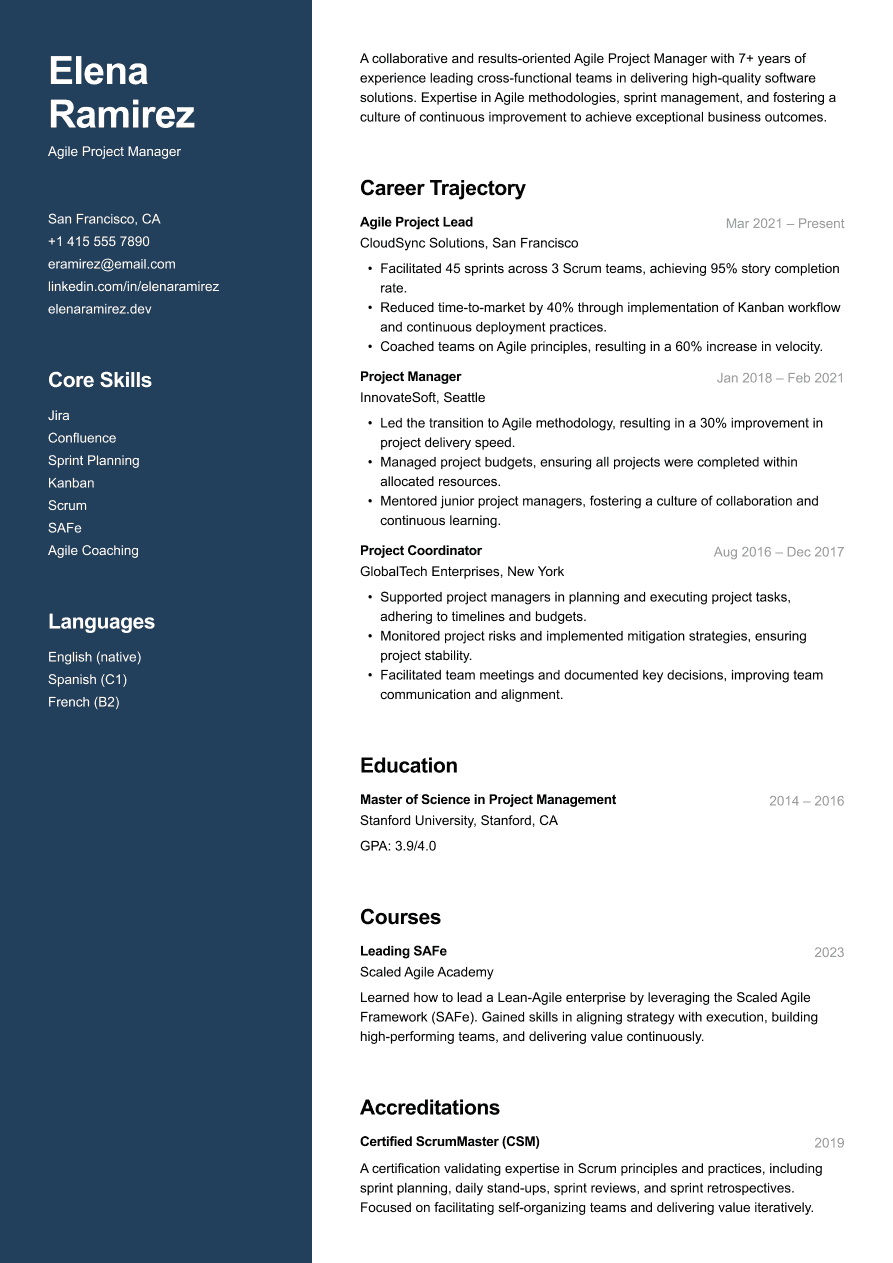
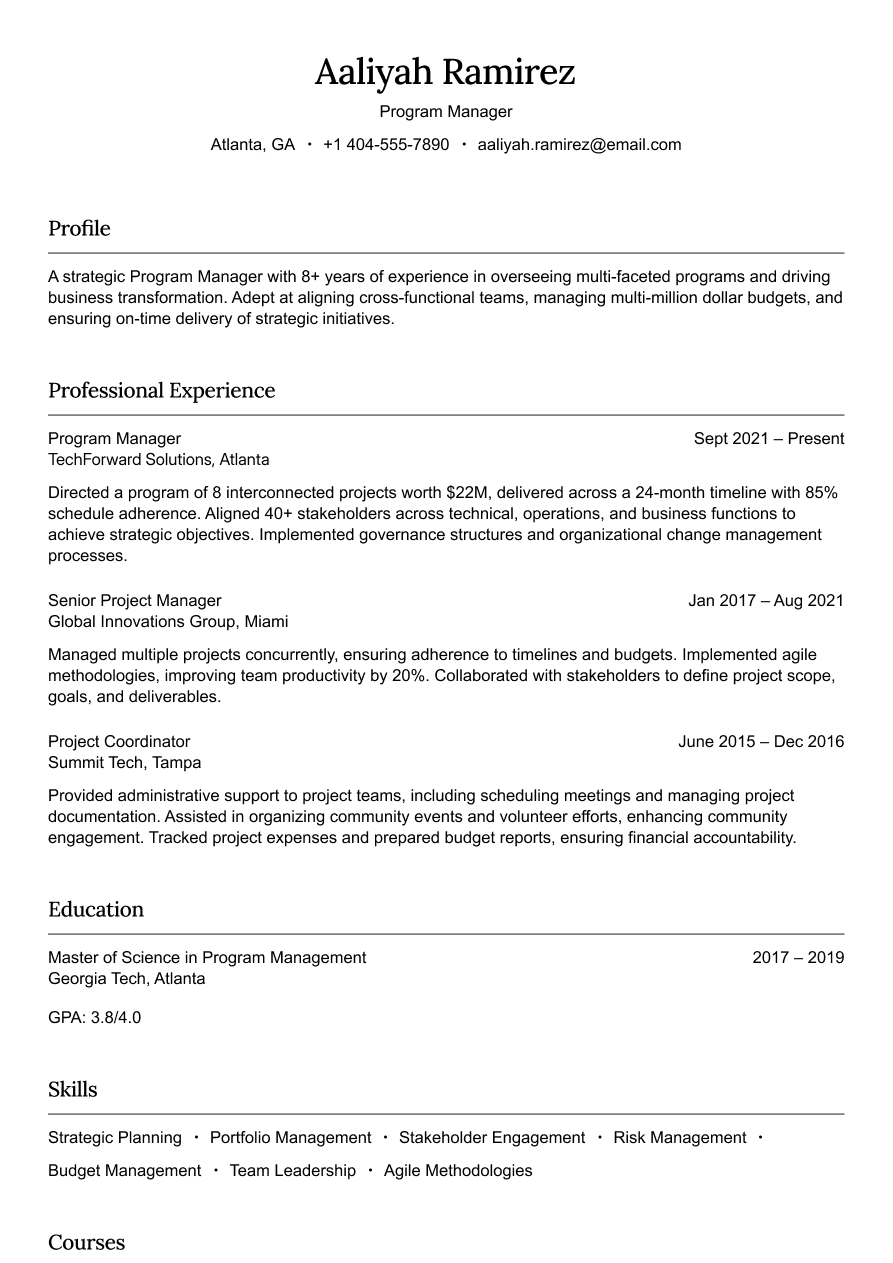
The biggest mistake PMs make is writing task lists instead of achievement statements. "Managed projects" tells recruiters nothing. "Led $2.5M software implementation 3 weeks ahead of schedule, reducing operational costs by 18%" shows real value.
Successful project manager resumes follow a pattern: they open with scope (budget size, team size, project complexity), explain the challenge or objective, and close with measurable results. Every bullet point should answer: What changed because you were there?
"Project managers who quantify their impact — budgets managed, timelines delivered, stakeholders aligned — get 3x more interview requests than those who don't."
If you're still determining how to structure your PM resume or balance technical methodology with leadership achievements, starting from a proven professional resume template can help you avoid common formatting mistakes that cause ATS rejection.
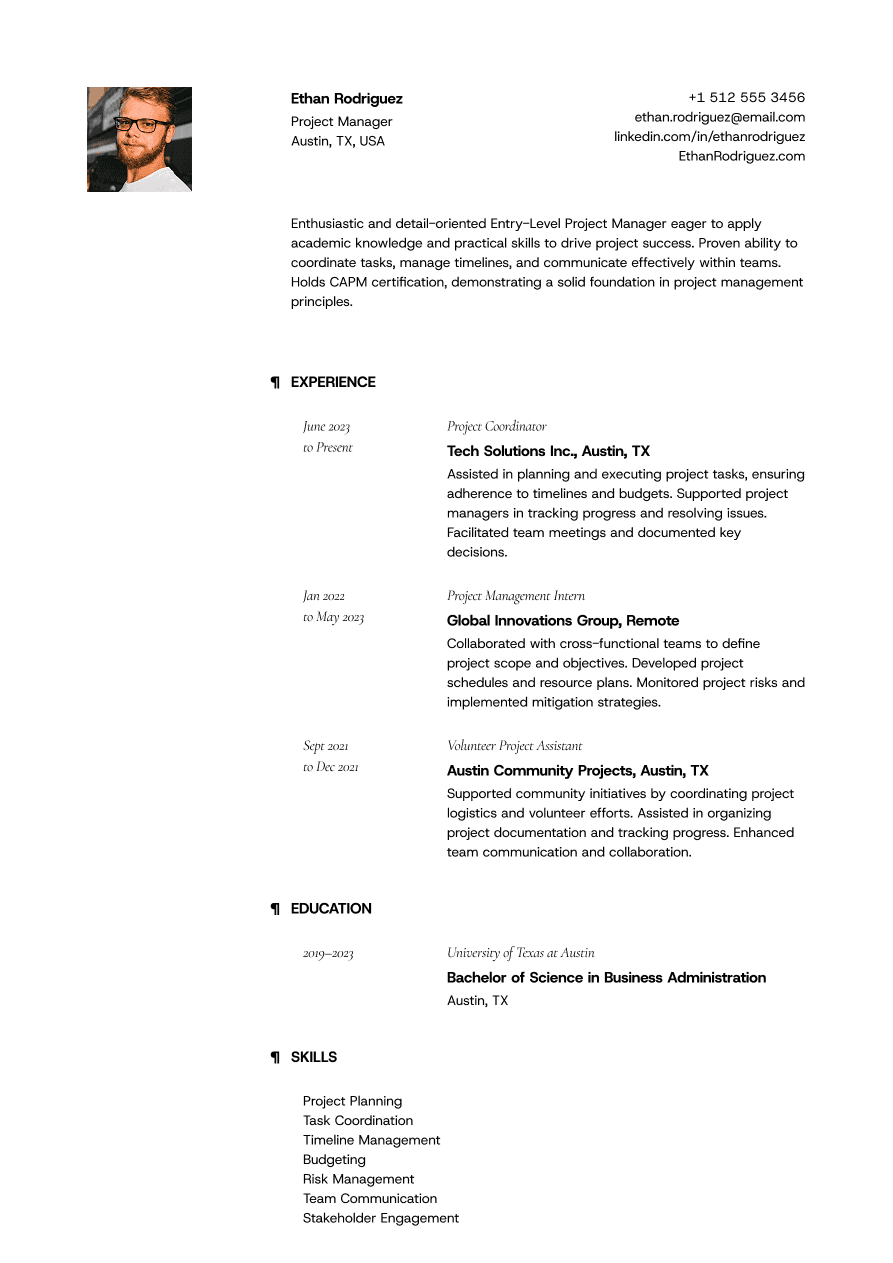
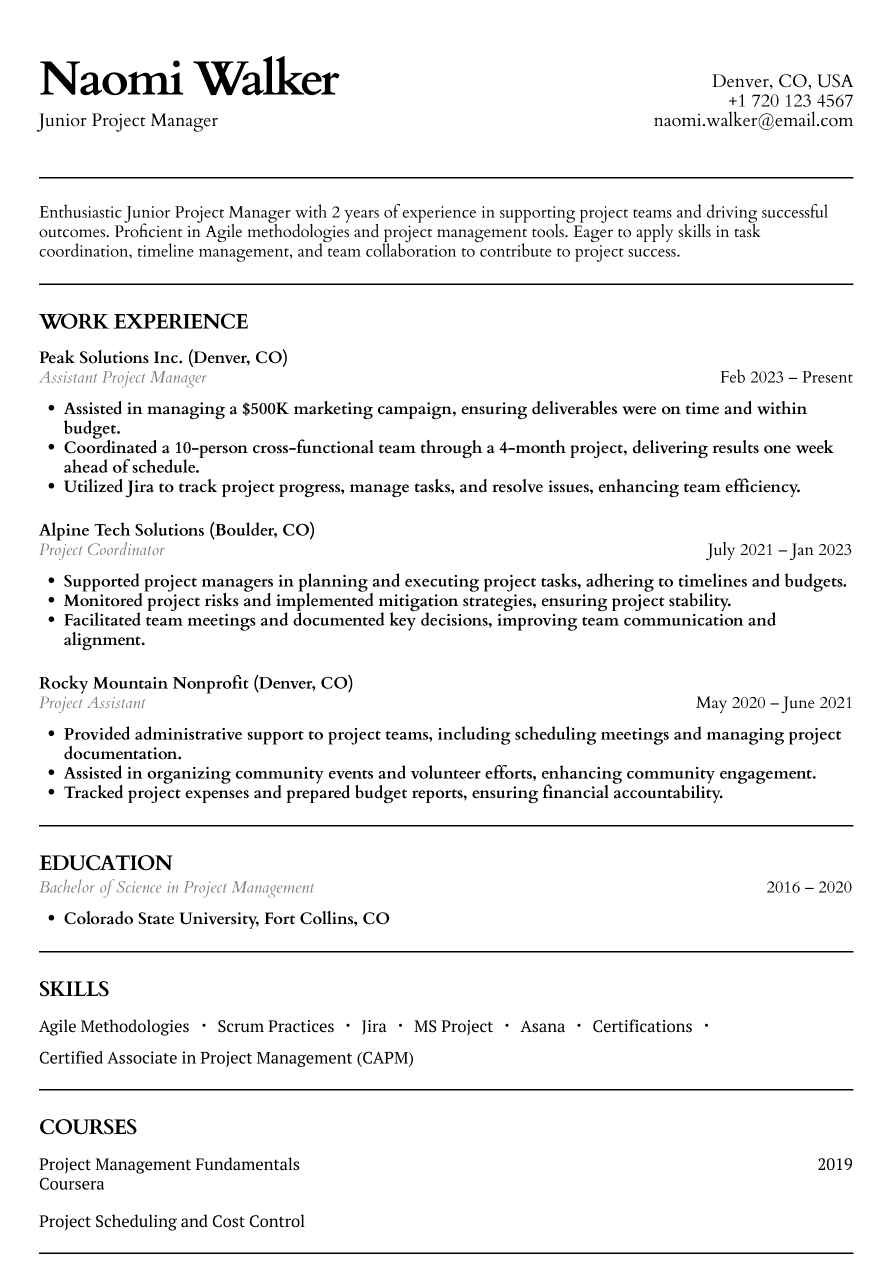
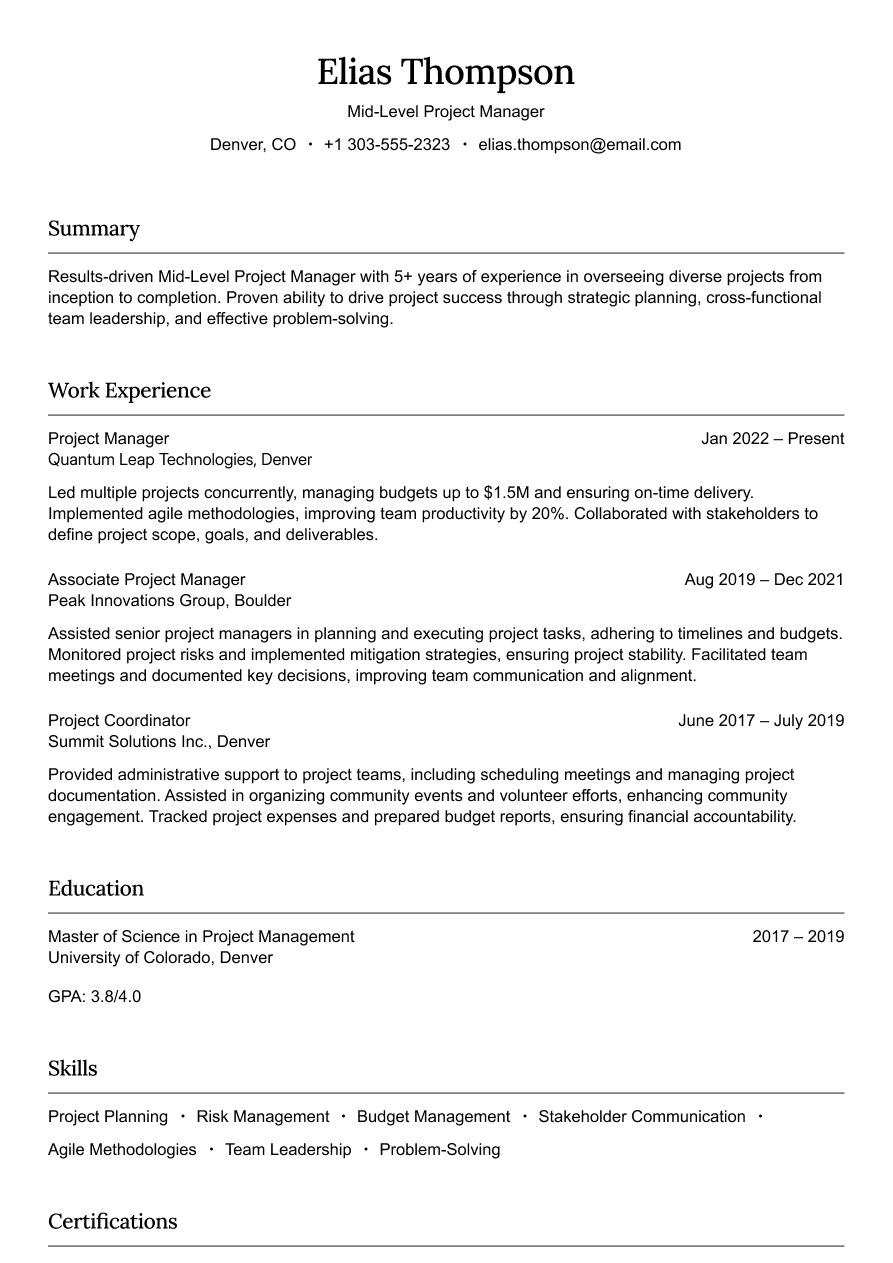
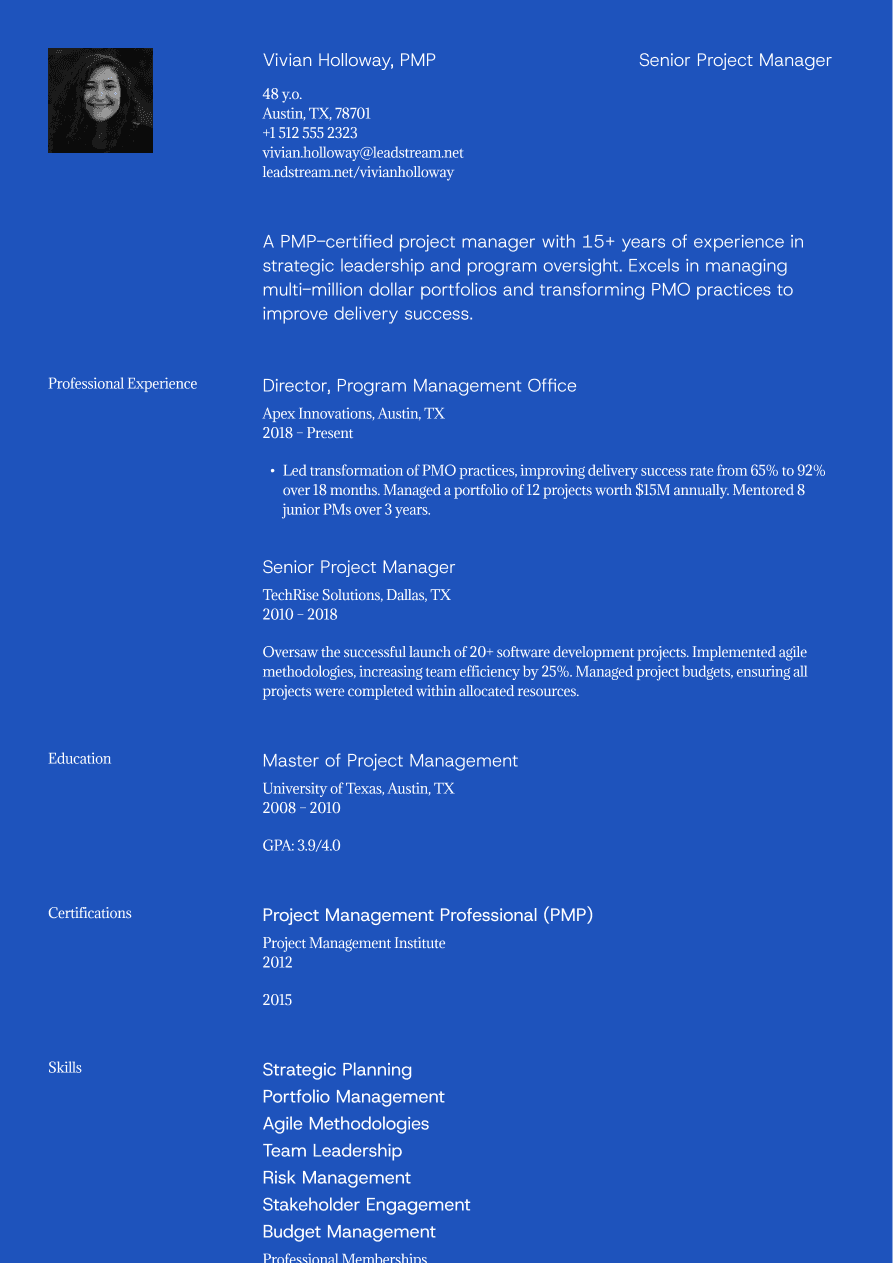
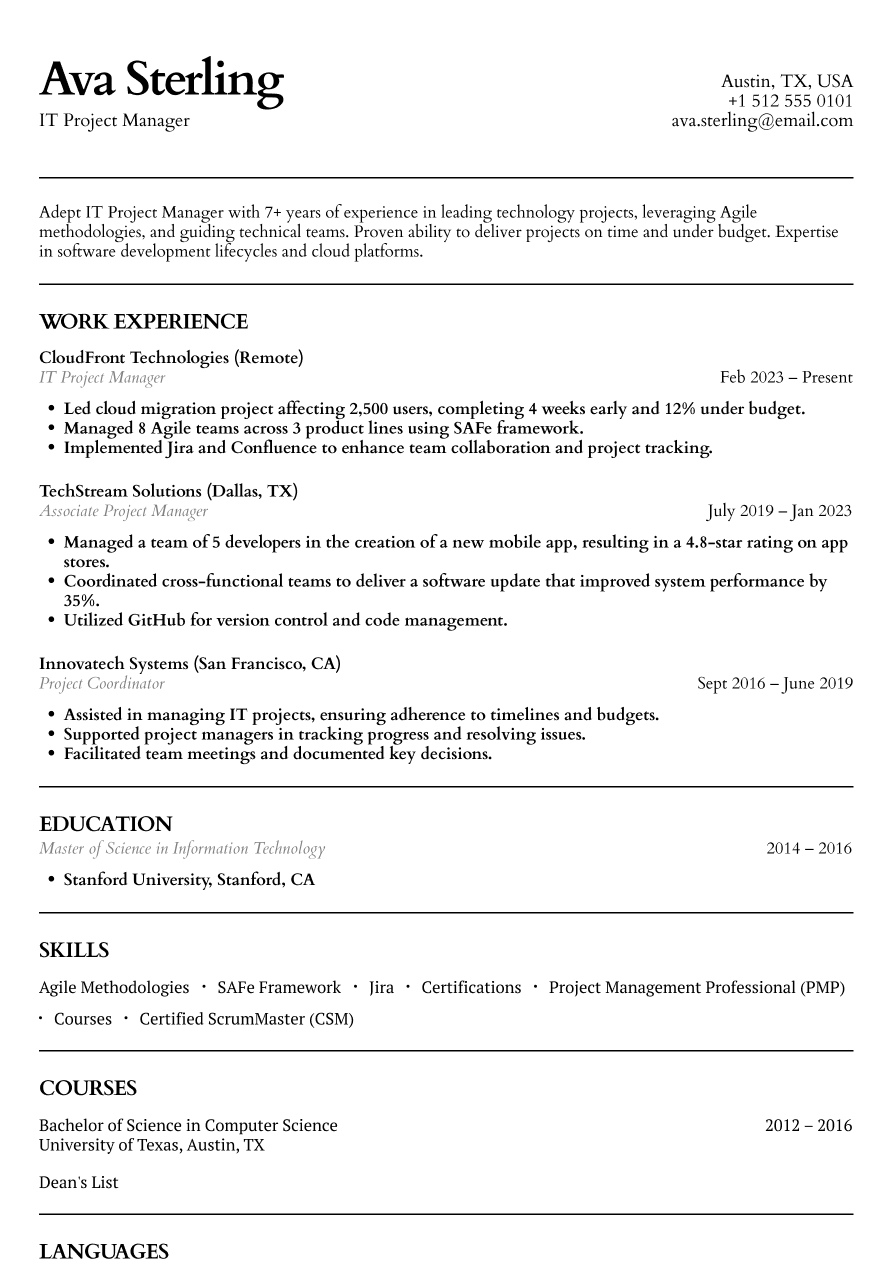
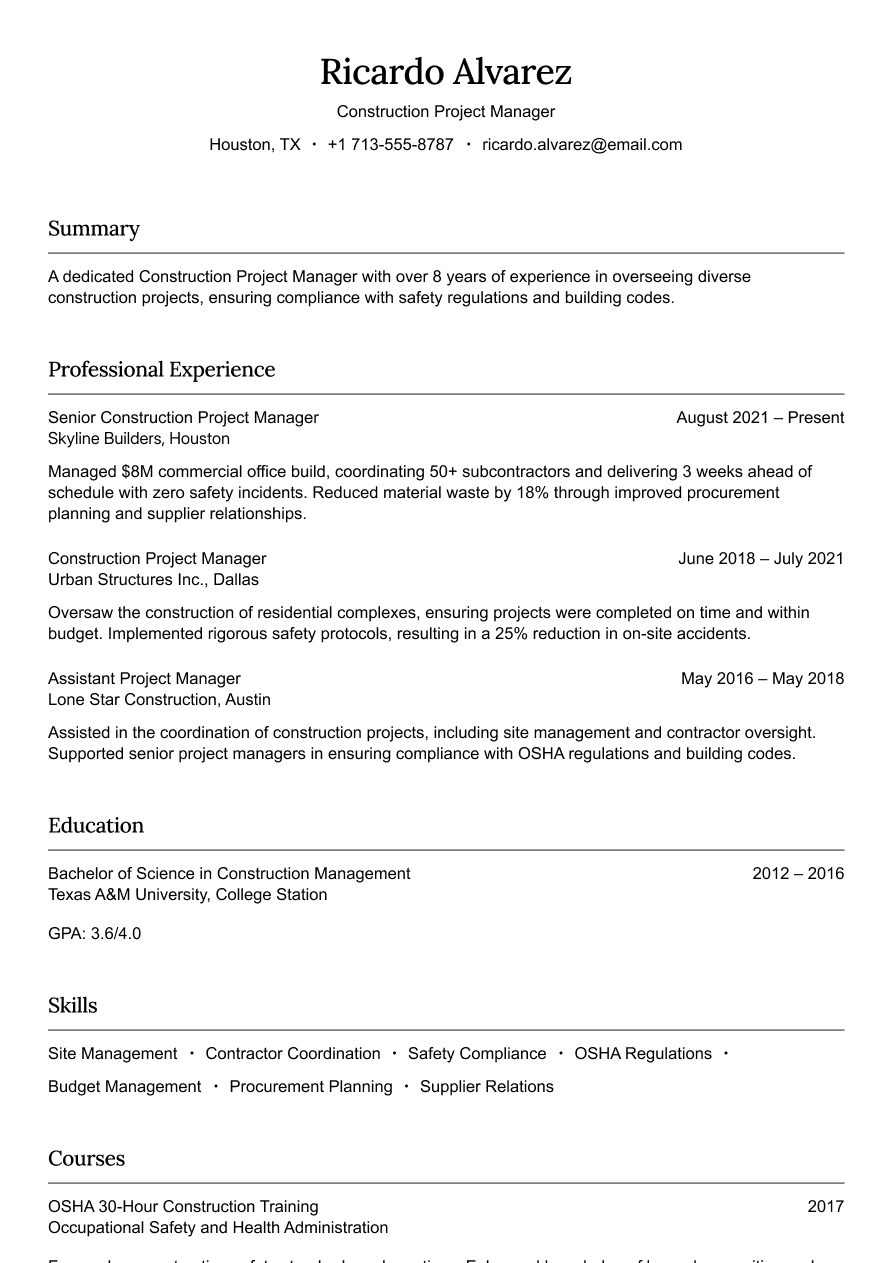
Project Manager Resume Examples by Level and Industry
What Recruiters Actually Scan For in PM Resumes
Project management recruiters have a checklist. They scan for specific signals in under 10 seconds, and if those signals aren't obvious, your resume gets discarded — regardless of your actual qualifications.
What they look for first:
Budget responsibility: Dollar amounts managed (even if indirect oversight)
Team size: Number of direct reports or cross-functional team members coordinated
Delivery metrics: On-time completion rates, budget adherence, scope management
Methodology fluency: Agile, Scrum, Waterfall, Kanban, hybrid approaches
Certifications: PMP, PMI-ACP, CAPM, Scrum Master
Without these elements visible in the first third of your resume, recruiters assume you lack the experience they need. Even if you have 10 years of PM work, unclear presentation kills your chances.
For guidance on structuring your entire resume to highlight these critical signals, see our complete guide on how to write a resume that passes both ATS systems and human review.
How to Quantify Project Management Achievements
The difference between weak and strong PM resumes comes down to one thing: specificity. Generic statements like "successfully delivered projects" mean nothing. Specific statements like "delivered 8 concurrent projects totaling $4.2M with 95% on-time completion rate" demonstrate capability.
Framework for quantifying PM work:
Category | What to Measure |
|---|---|
Budget | Total $ managed, cost savings, under-budget % |
Timeline | Delivery speed, schedule adherence, early completion |
Team | Size managed, retention rates, productivity gains |
Scope | Features delivered, requirements met, change requests handled |
Stakeholders | Number aligned, satisfaction scores, buy-in achieved |
Even entry-level PMs can quantify: "Coordinated 15-person team across 3 departments" or "Tracked $750K project budget with weekly variance reporting" demonstrates real project exposure with measurable scope.
PMP and PM Certifications: Do They Matter?
Certifications aren't required for every PM role, but they significantly improve your odds — especially for competitive positions or career changes into project management.
High-value PM certifications:
PMP (Project Management Professional): Industry standard, especially for enterprise roles
PMI-ACP (Agile Certified Practitioner): Essential for tech/software PM roles
CAPM (Certified Associate in PM): Entry-level alternative to PMP
CSM (Certified Scrum Master): Valuable for Agile-focused environments
List certifications prominently with full name (not just acronym), certifying body, and year obtained. Example: "Project Management Professional (PMP), Project Management Institute, 2024."
If you lack formal certifications, emphasize methodology experience instead: "Led 12 Agile sprints using Scrum framework" or "Managed waterfall projects following PMI standards" demonstrates knowledge without credentials.
Choosing the Right Resume Format for Project Manager Roles
Project manager resumes need to convey organization and clarity instantly. Complex layouts, graphics, or creative formatting suggest you can't prioritize information effectively — exactly what employers don't want in a PM.
Effective PM resumes use:
Reverse chronological format (most recent role first)
Clear section headers (Experience, Certifications, Skills, Education)
Bullet points that start with strong action verbs (Led, Delivered, Managed, Implemented)
Quantified achievements in every role
Using a clean ATS-friendly resume template designed for professional roles helps ensure your project outcomes, leadership experience, and methodology expertise remain the focus — especially critical when applying across different industries or project types.
Avoid: tables for work history, graphics/charts, photos, or multi-column layouts. These break ATS parsing and make it harder for recruiters to extract key information quickly.
Project Manager Resume FAQ
Q: Should I include every project I've managed on my resume?
No. Include only your 3-5 most relevant, impressive, or recent projects per role. Focus on those with the largest budgets, biggest teams, most complex challenges, or best outcomes. If a project doesn't strengthen your case for the specific role you're pursuing, leave it out.
Q: How do I describe project management experience if I don't have "Project Manager" as my official title?
Focus on project-based achievements within your actual role. Example: "Led cross-functional initiative to redesign customer onboarding process, coordinating 8 stakeholders across 4 departments and reducing time-to-activation by 40%." This demonstrates PM skills regardless of title. Consider adding a "Key Projects" section if your formal role wasn't explicitly PM-focused.
Q: Should project manager resumes be one page or two pages?
One page for entry-level or early-career PMs (0-5 years). Two pages for experienced project managers with substantial delivery history. Never exceed two pages. If you have 15+ years of experience, focus on the most recent 10-12 years and summarize earlier roles briefly.
Q: Do I need to list every software tool I've used?
No. List only tools relevant to the role you're targeting and that you've used extensively in the past 2-3 years. Common PM tools to include: Jira, Asana, MS Project, Monday.com, Smartsheet, Confluence. Don't list basic tools everyone knows (Excel, Email, Google Suite) unless the job specifically requires them.
Q: How do I show leadership on a PM resume if I haven't managed direct reports?
Project managers often lead without formal authority. Highlight: facilitating team decisions, resolving stakeholder conflicts, driving consensus across departments, mentoring junior PMs, presenting to executives, or influencing resource allocation. Example: "Facilitated alignment among 12 cross-functional stakeholders across engineering, design, and marketing to launch product feature 2 weeks ahead of target date."